Can You Use Sick Days for Mental Health? Your Complete Guide
Mental health is health — and yes, you can use sick days for mental health. Whether you’re dealing with anxiety, burnout, depression, or emotional exhaustion, taking time off for your mental well-being is not only valid — it is often legally protected. In this guide, we’ll walk you through everything you need to know about using sick leave for mental health, your rights as an employee, and how to take that important step toward feeling better.
What Is a Mental Health Day?
A mental health day is a planned or unplanned day off from work or school that is specifically taken to rest, recover, and recharge your emotional and psychological well-being. Unlike a regular vacation, a mental health day is focused on healing the mind — not sightseeing or socializing. It is a preventive step to avoid full burnout, emotional breakdown, or more serious mental health conditions.
Common reasons people take a mental health day include:
- Chronic workplace stress or burnout
- Anxiety or panic attacks affecting daily life
- Episodes of depression or emotional exhaustion
- Grief, loss, or family crisis
- Feeling mentally overwhelmed and unable to focus
Can You Legally Use Sick Days for Mental Health?
The short answer is yes, in most cases you can. Mental health conditions are recognized as legitimate medical reasons under many workplace policies and laws. Here is a breakdown of how this works:
1. Employer Sick Leave Policies
Most employers define sick leave broadly to cover any illness, incapacity, or medical appointment — physical or mental. If your company’s policy uses this kind of language, a mental health day qualifies as a valid sick day. Always check your employee handbook or HR guidelines to be sure.
2. State Laws in the U.S.
As of 2024, 18 U.S. states plus Washington D.C. require employers to provide paid sick leave that explicitly includes mental health reasons. States like California, New York, and Washington have strong protections for employees who need mental health-related time off.
3. FMLA — Family and Medical Leave Act
If your mental health condition is serious and ongoing, the Family and Medical Leave Act (FMLA) may apply. Under FMLA, eligible employees can take up to 12 weeks of unpaid, job-protected leave per year. Qualifying conditions include depression, PTSD, anxiety disorders, and other serious mental health diagnoses that require inpatient care or regular treatment from a healthcare provider.
4. Americans with Disabilities Act (ADA)
The ADA (Americans with Disabilities Act) protects employees with mental health conditions that substantially limit one or more major life activities. Under the ADA, employers must provide reasonable accommodations — which can include modified schedules or additional time off for mental health treatment.
Signs You May Need a Mental Health Sick Day
Not sure if you qualify for a mental health day? Look out for these warning signs:
- Constant fatigue — You’re waking up tired even after a full night’s sleep.
- Inability to concentrate — You can’t focus on even simple tasks at work.
- Emotional numbness or irritability — You feel disconnected or snap at small things.
- Physical symptoms of stress — Headaches, stomach issues, or chest tightness without medical cause.
- Dreading going to work — The thought of another workday feels overwhelming or impossible.For deeper insight into mental health color coding and emotional awareness, visit mentalhealthcolor.com — a helpful resource that maps emotions and mental states visually.
How to Call in Sick for a Mental Health Day
Calling in for a mental health day can feel awkward, but it does not have to be. Here are simple, professional steps to follow:
Step 1: Review Your Company Policy
Before calling in, check your employee handbook to understand how sick leave is defined. Know whether your company uses a combined PTO (Paid Time Off) system or separate sick days.
Step 2: Notify Your Employer Early
Reach out to your manager or HR department as early as possible — ideally before your workday begins. You do not need to reveal private details. A simple statement like:
…is completely sufficient in most workplaces.
Step 3: Ask About Documentation if Needed
For a single day, most employers do not require a doctor’s note. However, if you need extended leave, ask your HR department whether documentation from a mental health professional or therapist is required.
Step 4: Use the Day Intentionally
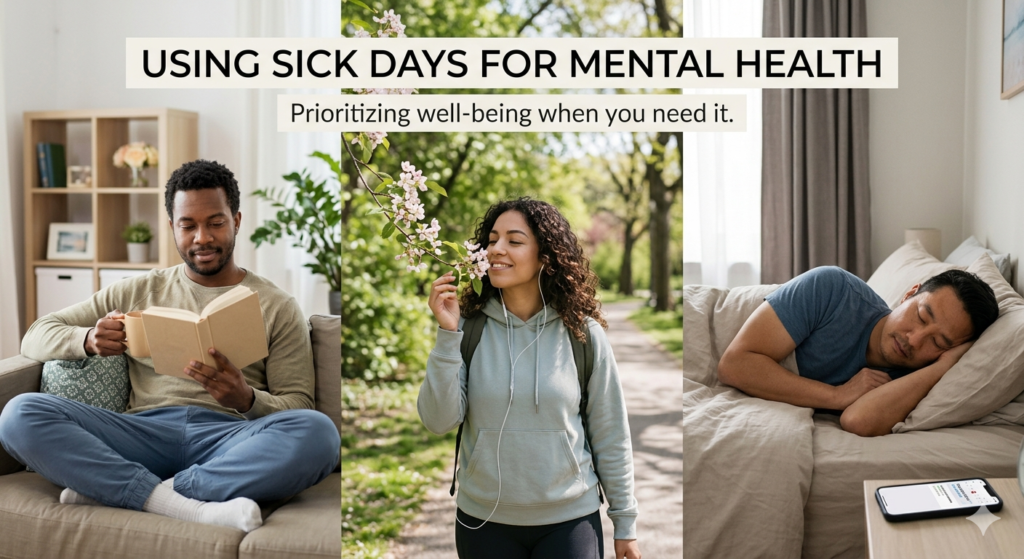
A mental health day only works if you actually rest and recover. Avoid checking work emails. Instead, focus on activities that truly restore you — rest, nature, therapy, light exercise, journaling, or spending quality time with loved ones.
Types of Leave Available for Mental Health
Depending on your situation, here are the types of leave you can use:
- Sick Leave — Most common option for short-term mental health days.
- Paid Time Off (PTO) — A flexible combined leave system that covers any reason, including mental health.
- FMLA Leave — For serious, ongoing mental health conditions requiring extended time off (up to 12 weeks unpaid).
- Short-Term Disability — Available at some companies if your mental health condition prevents you from working for a longer period.
- Unpaid Leave — If no paid options remain, you may request unpaid leave. Depending on your employer, this can still be job-protected.
Mental Health at Work: Why Employers Should Support It
Supporting employee mental health is not just compassionate — it is good for business. Research consistently shows that:
- Employees who take mental health breaks are more productive and focused on return.
- Companies with mental health policies see lower employee turnover rates.
- Proactively addressing mental wellness reduces long-term sick leave usage.
- A supportive culture attracts top talent and improves team morale.
The World Health Organization (WHO) has even classified burnout as an official occupational syndrome, making it clear that workplace mental health is a global priority, not a personal weakness.
Frequently Asked Questions (FAQs)
Do I need a doctor’s note for a mental health sick day?
For a single day off, most employers do not require a doctor’s note. However, if you are taking extended leave under FMLA or requesting ADA accommodations, documentation from a licensed healthcare provider may be required.
Can my employer fire me for taking a mental health day?
If your sick leave policy covers mental health and you are using it appropriately, your employer cannot legally retaliate against you. If they penalize you, it could be considered discrimination under the Equal Employment Opportunity Commission (EEOC) guidelines.
How do I know if I need a day off or extended leave?
If you need one or two days to decompress and recharge, a sick day is appropriate. If you are dealing with a serious condition requiring ongoing treatment, consider speaking to a healthcare provider about FMLA or disability leave.
Taking the day off is only the first step. Here is how to make it truly restorative:
- Disconnect from work — No emails, no Slack, no calls. Set an out-of-office message and truly step away.
- Move your body gently — A short walk, light yoga, or stretching can do wonders for anxiety and low mood.
- Eat nourishing food — What you eat directly affects how you feel emotionally.
- Talk to someone — A friend, family member, or therapist can help you process what you’re feeling.
- Engage in a hobby — Reading, cooking, gardening, painting — whatever brings you joy and calm.
Final Thoughts:
The question “can you use sick days for mental health” has a clear answer: yes, and you should, without guilt. Mental health is not separate from physical health — it is the foundation of everything. When your mind needs rest, give it rest. Know your rights, understand your company’s policies, and advocate for your own well-being.
