What Does a Med Tech Do? Your Ultimate Career Guide
Have you ever wondered what happens to your blood sample after a nurse draws it during a checkup? I certainly did! A few years ago, I was sitting in a clinic waiting for test results, and I couldn’t help but marvel at the hidden heroes working behind the scenes. It turns out that a whole team of dedicated professionals is responsible for figuring out exactly what is going on inside our bodies. These brilliant individuals are medical technologists, and they form the absolute backbone of modern medicine!
Medical technology is a thrilling and vital part of healthcare. Without these experts, doctors would be guessing at diagnoses instead of knowing exactly how to treat us. Medical technologists use amazing, cutting-edge equipment to analyze samples, spot diseases, and save lives every single day. If you love science and want to help people without necessarily being at the bedside, this is an incredible path to explore.
The demand for skilled healthcare professionals is always strong, and clinical laboratories are no exception. With thousands of job openings expected each year, hospitals and clinics are constantly searching for passionate individuals to join their teams. Let’s dive right into what makes this career so fantastic, what a daily routine looks like, and how you can jump into this exciting field!
What Is a Med Tech?
A medical technologist, often called a medical laboratory scientist, is a highly trained professional who performs complex tests on patient samples. They look at blood, tissue, and other bodily fluids to find crucial clues about a patient’s health. Think of them as healthcare detectives! They use microscopes and advanced machinery to solve medical mysteries.
You might hear the terms “medical technologist” and “medical laboratory technician” used interchangeably, but there is actually a big difference between the two! A medical technologist typically holds a bachelor’s degree and performs highly complex, detailed manual tests. On the other hand, a technician usually holds an associate’s degree and focuses on more routine, automated testing. Technologists often oversee technicians and take on more responsibilities related to quality control.
These incredible professionals work across various industries. While the vast majority are employed in the healthcare sector, you can also find them making huge contributions in research facilities, pharmaceutical companies, and educational institutions.
Main Duties of a Med Tech
The day-to-day life of a medical technologist is action-packed and incredibly rewarding! You will never be bored because there are so many different tasks to handle. Let’s break down the core responsibilities you can expect to tackle.
Performing Laboratory Tests
Testing is the heart and soul of this career! Med techs spend a lot of time analyzing various samples to help doctors figure out what is making a patient sick.
- Blood tests: You will run comprehensive metabolic panels, check cholesterol levels, and type blood for safe transfusions. Blood bank technologists specifically focus on preparing blood components for patients who desperately need them.
- Urine analysis: Testing urine helps detect kidney issues, diabetes, and nasty infections. It is amazing how much a tiny sample can reveal!
- Disease detection: Microbiology technologists examine samples to identify bacteria, viruses, and other microorganisms. Finding the exact cause of an infection means the patient gets the right antibiotics quickly!
Operating Medical Equipment
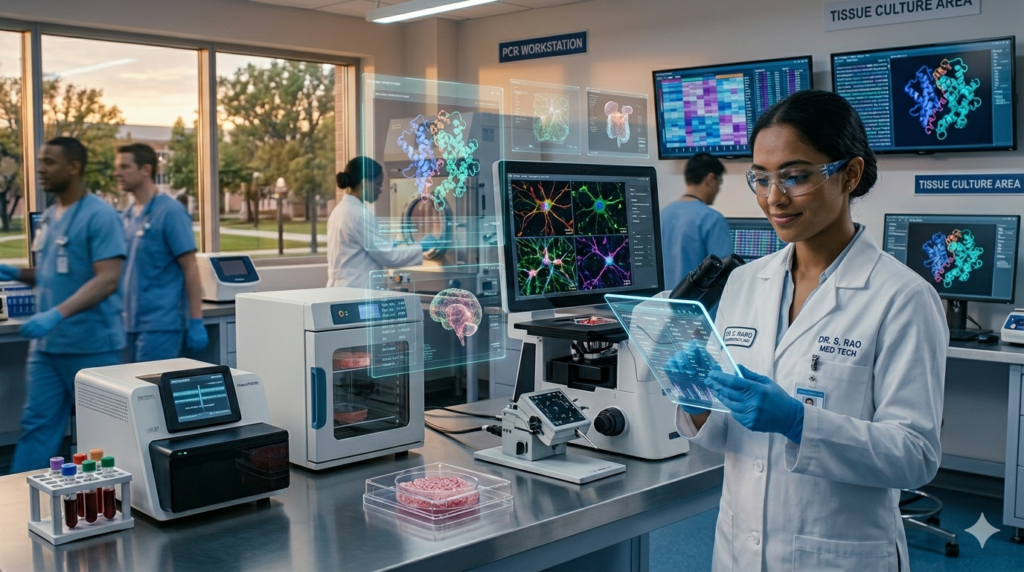
If you love playing with high-tech gadgets, you will be in heaven! Clinical laboratories are filled with sophisticated equipment that requires a skilled touch.
- Diagnostic machines: You will use microscopes to examine cells up close, looking for abnormalities like cancerous growths. Cytotechnologists specialize in this exact process!
- Lab analyzers: Automated cell counters and chemistry analyzers can process multiple samples at the exact same time. It is a highly efficient way to get results fast.
- Maintenance and calibration: You cannot just press a button and walk away! Med techs are responsible for setting up, calibrating, and troubleshooting these sensitive machines to ensure every single test is 100% accurate.
Analyzing Test Results
Running the test is only half the fun! Once the machine gives you a result, you have to know what it actually means.
- Reporting accurate data: You will look at the numbers and confirm they make logical sense based on the patient’s condition. Accuracy is absolutely critical here!
- Helping doctors diagnose patients: Doctors rely heavily on your expertise. You will frequently discuss your findings with physicians, surgeons, and other healthcare providers so they can create the best possible treatment plan for the patient.
Maintaining Patient Records
We all know that paperwork is a part of life, and healthcare is very strict about record-keeping!
- Data entry and documentation: Every test result must be meticulously logged into the patient’s electronic medical record. This creates a permanent history that doctors can reference later.
- Following healthcare regulations: Laboratories have strict quality control standards. You must follow safety protocols and privacy laws, like HIPAA, to protect patient information and maintain a sterile, safe working environment.
Where Do Med Techs Work?
You might be wondering where exactly you will spend your days working. The great news is that you have plenty of options!
- Hospitals: The vast majority of medical technologists work in general medical and surgical hospitals. It is a fast-paced environment where you get to help patients in emergency situations!
- Diagnostic laboratories: Standalone medical labs process samples sent over from various local doctor’s offices. It is a highly focused, science-driven setting.
- Clinics: Many physicians’ offices have smaller, in-house laboratories. This is a fantastic option if you prefer a standard daytime schedule.
- Research centers: If you love discovering new things, working in a research center allows you to help develop new testing methods or study diseases on a molecular level.
- Blood banks: Here, you will type and cross-match blood donations to ensure they are perfectly safe for patients undergoing surgeries or trauma care.
Skills Needed to Become a Med Tech
Do you have what it takes to thrive in the lab? I bet you do! Here are the top skills that make a medical technologist truly shine:
- Attention to detail: One tiny mistake can change a diagnosis. You must be incredibly precise and meticulous when handling samples and recording data.
- Technical knowledge: You need a solid grasp of chemistry, biology, and math. Operating complex lab equipment requires a sharp, analytical mind!
- Communication skills: Even though you are in a lab, you still need to communicate! You will discuss complicated results with doctors and occasionally collect samples directly from nervous patients. A friendly, supportive attitude goes a long way.
- Problem-solving abilities: When a machine acts up or a test result looks bizarre, you need to troubleshoot the issue quickly and effectively.
Education and Certification Requirements
Ready to jump into this fantastic career? The path is straightforward and incredibly rewarding!
First, you need the right educational background. Medical technologists typically earn a bachelor’s degree in medical technology or a related life science, like biology or chemistry. These degree programs are packed with fascinating courses in hematology, microbiology, and clinical chemistry!
Next comes certification! While not every single state requires a license, most employers absolutely prefer to hire certified professionals. You can earn your credentials through organizations like the American Society for Clinical Pathology (ASCP) or American Medical Technologists (AMT). Passing their certification exam proves you are a top-tier expert!
Finally, hands-on training is a must. Most accredited degree programs include clinical rotations or internships at a local hospital. This gives you the incredible opportunity to practice your skills in a real-world setting before you even graduate!
Benefits of Becoming a Med Tech
Choosing to become a medical technologist comes with a whole host of amazing perks!
- Strong job demand: Healthcare will always need lab professionals! The Bureau of Labor Statistics projects about 22,600 job openings each year over the next decade.
- Competitive salary: Your hard work will definitely pay off! The median annual wage for clinical laboratory technologists and technicians sits at a healthy $61,890, with the highest earners making well over $90,000!
- Career growth opportunities: You can specialize in areas like molecular biology or immunology, or move up into laboratory management roles!
- Contribution to patient care: Even behind the scenes, you are saving lives. Knowing that your precise work directly leads to a patient getting the right treatment is an incredible feeling!
Challenges Med Techs Face
Of course, every job has its hurdles. It is always best to know what to expect so you can face them head-on!
- Long working hours: Because hospitals are open 24/7, you might need to work evening, weekend, or holiday shifts.
- Handling sensitive samples: You will work with infectious specimens and biohazardous materials. This requires strict adherence to safety protocols, wearing protective gear, and maintaining a spotless workspace.
- Staying updated with new technology: The medical field moves fast! You will need to continuously learn how to use new machines and adapt to updated testing methods throughout your career.
Future of Medical Technology Careers
The future of medical technology is incredibly bright and filled with innovation! If you love staying ahead of the curve, you will absolutely love where this industry is heading.
AI in healthcare is making huge waves! Artificial intelligence is stepping up to help analyze complex data sets much faster than humanly possible. Rather than replacing med techs, AI acts as a super-smart assistant, helping you spot abnormalities in cell samples with astonishing accuracy.
Automation in laboratories is also completely changing the game. We are seeing more robotic systems handling routine sorting and testing. This shift frees up medical technologists to focus on the really tough cases that require deep human expertise and critical thinking. As the aging population grows, the demand for genetic testing and disease diagnosis will only increase, making your skills more valuable than ever before!
Wrap Up Your Med Tech Journey
Wow, what an incredible field! Medical technologists are absolute rockstars who keep the healthcare system running smoothly. From performing life-saving blood tests to operating the most advanced medical equipment on the planet, these professionals do it all.
They provide doctors with the exact information needed to treat diseases, all while maintaining strict quality control and keeping patient records pristine. Though the hours can sometimes be long, the competitive salary and the knowledge that you are genuinely helping people make it so worthwhile.
If you have a passion for science, an eye for detail, and a heart for helping others, becoming a medical technologist might just be your perfect match. Take the leap, look into a degree program, and start your journey toward this fascinating and rewarding career today!
