
How to Stop Throbbing Pain After a Root Canal: Causes, Relief & Recovery
A throbbing sensation after a root canal can catch you off guard, especially when you expect the treatment to end your tooth pain. As the numbness fades, mild soreness or pressure may appear while the surrounding tissues recover. Understanding how to stop throbbing pain after root canal treatment starts with knowing what causes it and which comfort measures are appropriate.
Pain after root canal treatment often improves within a few days, but every recovery is different. Simple root canal aftercare, gentle eating habits, and appropriate pain relief after root canal treatment can make the healing period easier. However, severe pain after root canal treatment, swelling, or worsening symptoms should prompt you to contact your dentist.
Why Does Throbbing Pain Happen After a Root Canal?
The main reason is often inflammation around the treated tooth. During root canal treatment, the dentist removes infected or inflamed pulp from inside the tooth. However, the tissues surrounding the root remain alive. Those tissues can become irritated during the root canal procedure, which may create pressure, tenderness, or a pulsing sensation afterward.
The situation can feel similar to a small bruise. Your tooth may feel fine inside while the surrounding ligament remains tender. Existing infection can also leave the area sensitive during early healing. A sore tooth after root canal treatment may therefore hurt when you bite even when the treatment itself went well. This type of post-root canal pain should generally become easier with time.
Common Causes of Pulsing Pain After Root Canal Treatment
Several factors can contribute to throbbing tooth pain, including tissue irritation, inflammation near the root tip, and pressure from biting. A tooth that feels unusually high can also receive extra force during chewing. Less commonly, continuing infection, a crack, or another problem can cause persistent symptoms and requires professional evaluation.
Is Throbbing Pain Normal After a Root Canal?
So, is throbbing pain normal after a root canal? Mild soreness or tenderness for a few days can be normal. The American Association of Endodontists notes that treated teeth may remain sensitive during the early healing period. This is particularly common when the tooth had infection or significant pain before treatment.
The trend matters most. Normal root canal recovery should generally move toward improvement rather than steadily intensifying. Mild root canal discomfort may appear when chewing or touching the tooth. However, severe pain, visible swelling, or symptoms that remain intense beyond the expected early period deserve a dental assessment.
Normal Discomfort vs. Concerning Pain
Think of recovery as a downward slope. The discomfort should gradually become less noticeable. If you experience pain getting worse after root canal treatment, new swelling, or returning symptoms, don’t simply wait it out. Your dentist or endodontist can determine whether the tooth needs further attention.
| Symptom | What it may mean | What to do |
| Mild tenderness | Normal early healing | Continue recommended aftercare |
| Mild pain while chewing | Surrounding tissue irritation | Avoid heavy pressure and monitor improvement |
| Severe persistent pain | Possible complication | Contact your dentist |
| Visible swelling | Possible infection or inflammation | Seek prompt dental evaluation |
| Uneven bite | Excess pressure on the tooth | Ask your dentist for an adjustment |
How to Stop Throbbing Pain After Root Canal at Home
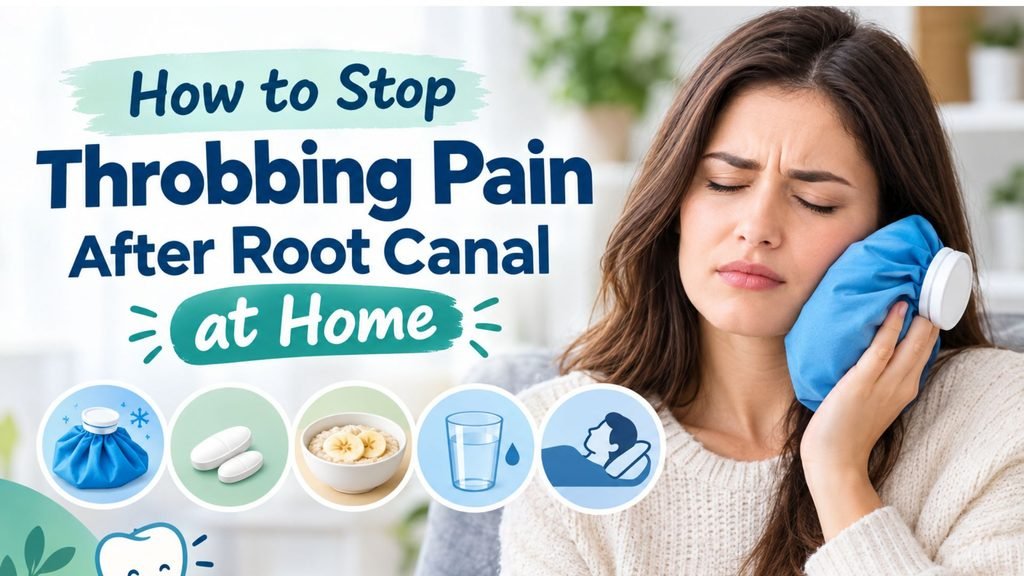
The best approach starts with your dentist’s instructions. For suitable adults, over-the-counter pain medication can help manage acute dental discomfort. The American Dental Association recommends non-opioid options as first-line treatment in many acute dental pain situations. However, your medical history, allergies, medications, pregnancy status, and other factors can change what is safe for you.
Simple comfort measures can help too. A cold compress for tooth pain may reduce temporary swelling and discomfort when applied briefly to the outside of your cheek. Applying an ice pack after root canal treatment should involve a cloth barrier rather than direct skin contact. Gentle brushing and avoiding heavy chewing also support root canal aftercare while the tissues settle.
Simple Ways to Ease Root Canal Pain
If you’re wondering how to relieve throbbing pain after a root canal, think comfort rather than aggressive treatment. Follow your prescribed instructions, protect the treated tooth, and allow your body time to heal. Don’t place aspirin directly against the gum or experiment with harsh substances because these can injure oral tissues.
What Can You Eat After a Root Canal?
Food choices can make tooth pain after root canal treatment easier to manage. During the early recovery period, choose foods that require little chewing. Eating soft foods after root canal treatment can reduce pressure on a tender tooth. Yogurt, scrambled eggs, oatmeal, pasta, mashed vegetables, and other soft options can be practical choices.
Temperature and texture also matter. Foods to avoid after root canal treatment include very hard, sticky, or difficult-to-chew choices when your dentist advises protecting the tooth. If the tooth has a temporary restoration, follow the specific instructions you received. Avoiding unnecessary pressure can support dental treatment recovery while the permanent restoration is completed.
Foods to Choose During Recovery
A useful rule is simple: choose foods that feel comfortable and don’t force the treated tooth to work hard. If chewing causes pain when chewing after root canal treatment, use the opposite side temporarily and speak with your dentist if the discomfort doesn’t steadily improve.
| Easier choices | Use caution with |
| Yogurt | Hard nuts |
| Oatmeal | Crunchy chips |
| Scrambled eggs | Sticky candy |
| Mashed vegetables | Chewy foods |
| Soft pasta | Hard crusts |
How Long Does Throbbing Pain Last After a Root Canal?
Many patients experience mild root canal pain for several days. The American Association of Endodontists states that symptoms commonly improve within three to five days. However, recovery differs between patients. The severity of the original infection, treatment complexity, and condition of the surrounding tissues can influence how quickly discomfort fades.
So, how long does root canal pain last? There isn’t one universal answer. A little tenderness can linger while root canal healing continues. What matters is the overall direction. If discomfort keeps increasing, becomes severe, or returns after improving, contact your dentist or endodontist for an examination.
What Your Recovery Timeline May Look Like
Immediately after treatment, numbness can last for several hours. As sensation returns, mild soreness may appear. Over the next several days, the area should generally become more comfortable. Healing after root canal treatment can take longer when the original tooth had substantial inflammation or infection.
When Is Throbbing Pain After a Root Canal a Cause for Concern?
Knowing when to contact your dentist can prevent a small problem from becoming more complicated. Severe or persistent pain deserves attention. The same applies to visible swelling after dental treatment, an uneven bite, returning symptoms, or significant pressure that doesn’t settle. The AAE specifically advises patients to contact their endodontist for severe pain or pressure lasting more than a few days.
Some symptoms require faster attention. Facial swelling, fever, feeling generally unwell, or difficulty swallowing or breathing can indicate a more serious dental problem. A root canal infection may require professional treatment rather than additional home remedies. Antibiotics also aren’t automatically needed for every dental infection; dentists determine their use based on the clinical situation.
Red Flags You Shouldn’t Ignore
Watch for signs of complications after root canal, especially when symptoms worsen instead of improve. If your tooth feels high when you bite, the dentist can check your bite. If swelling or severe pain develops, arrange prompt dental care rather than waiting several more days.
Professional Treatments for Persistent Root Canal Pain
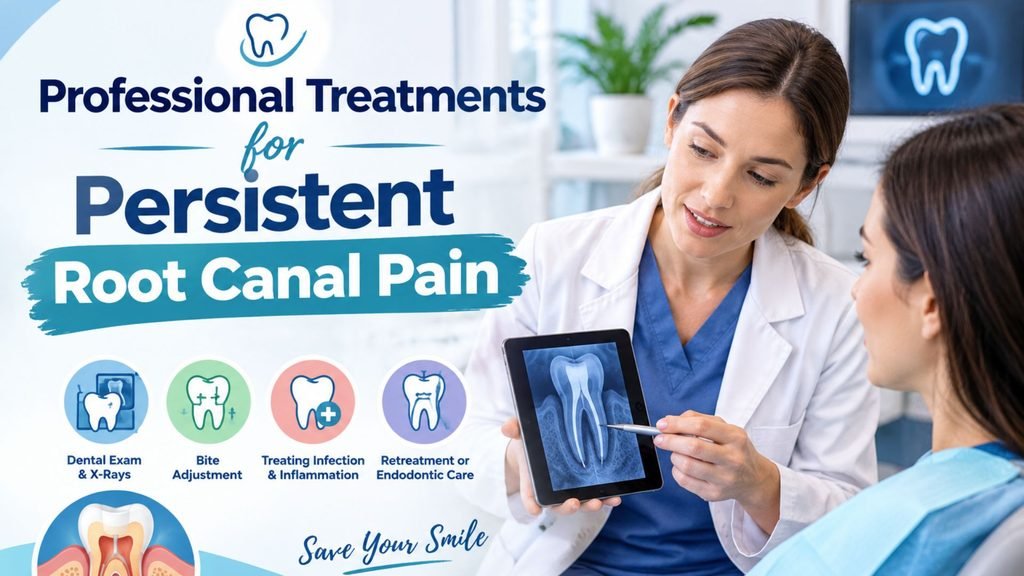
When pain relief after root canal treatment doesn’t last, your dentist needs to identify the cause. An examination may include checking the tooth, surrounding tissues, your bite, and dental X-rays. The goal isn’t simply to mask dental pain. It is to determine why the tooth isn’t healing as expected.
Treatment depends on the findings. A dentist may adjust the bite if the tooth receives excessive pressure. If persistent infection or another problem exists, an endodontist may recommend additional endodontic treatment. In selected cases, retreatment or endodontic surgery can help save the natural tooth rather than removing it.
What Your Dentist May Check
Your dental team may assess the bite, surrounding gum tissue, signs of tooth inflammation, and the quality of the previous treatment. They may also look for cracks, missed canal anatomy, or problems with the restoration. These checks help separate ordinary root canal discomfort from a condition that needs treatment.
How to Prevent Pain From Returning After a Root Canal
Good caring for a root canal tooth starts with completing the recommended restoration. A treated tooth can become vulnerable to fracture if it remains unrestored. Your dentist may recommend a crown or another permanent restoration based on the tooth’s condition and location. Don’t delay that dental appointment without discussing it with your provider.
Daily oral hygiene matters too. Brush and floss as directed, attend follow-up visits, and avoid using the treated tooth to bite unusually hard objects. Protecting the treated tooth also means following your provider’s restrictions while a temporary filling or crown remains in place. Consistent dental aftercare helps preserve the tooth for the long term.
Long-Term Care for a Root Canal Tooth
A root canal doesn’t mean you should stop caring for the tooth. Keep brushing and flossing unless your dentist tells you otherwise. Regular examinations can also identify new decay, gum problems, or restoration issues before they create another episode of root canal pain relief becoming necessary.
Frequently Asked Questions About Throbbing Pain After a Root Canal
| Question | Answer |
| Why does my tooth throb after a root canal? | Surrounding tissues can remain inflamed after treatment. Mild throbbing can occur while those tissues recover. |
| How long does root canal pain last? | Many patients improve within several days. Persistent or increasing pain should be assessed. |
| Can I take pain medicine after a root canal? | Appropriate non-opioid medicines often help. Follow your dentist’s instructions and check that the medicine is safe for you. |
| Why does my tooth hurt when I bite? | Early tissue irritation can cause tenderness. An uneven bite can also place extra pressure on the tooth. |
| Can a root canal tooth become infected again? | Yes. A previously treated tooth can sometimes develop new disease or fail to heal properly. |
| When should I call my dentist? | Contact your provider for severe pain, significant swelling, worsening symptoms, an uneven bite, or returning symptoms. |
Conclusion: Managing Throbbing Pain After a Root Canal
Understanding how to manage pain after a root canal starts with knowing what normal healing feels like. Mild soreness, tenderness, and some pressure can occur during early post-operative dental care. The symptoms should generally become easier rather than progressively worse. Following your provider’s instructions gives your tooth the best chance to recover comfortably.
If you’re still asking how to stop throbbing pain after a root canal, don’t focus only on suppressing the sensation. Pay attention to its pattern and accompanying symptoms. Severe pain, swelling, fever, or returning infection symptoms need professional assessment. With proper root canal aftercare, timely restoration, and regular dental care, a treated tooth can often remain functional for many years.

Pingback: Can a Tooth Infection Cause Headaches? Causes, Symptoms & Treatment