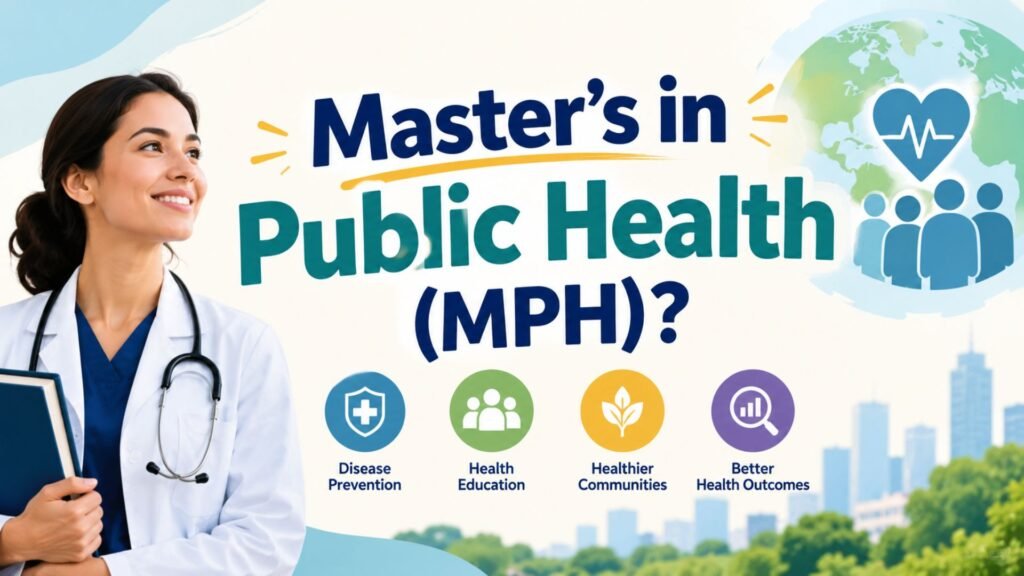
What Can You Do With a Master’s in Public Health (MPH)? Careers, Salaries, and Opportunities
A Master of Public Health (MPH) can open doors to careers in research, healthcare, government, and community programs. You can help prevent diseases, improve health policies, analyze medical data, or lead programs that protect entire populations. The right career depends on your interests, skills, and long-term goals.
If you’re wondering what can you do with a master’s in public health, start by looking beyond hospitals and clinics. Public health professionals work in laboratories, universities, nonprofit organizations, government offices, and private companies. Some focus on data while others educate communities or shape health policies. This guide explores career options, salaries, qualifications, and practical steps for building your future in the United States.
What Is a Master’s in Public Health (MPH)?
A Master’s degree in public health is a graduate qualification focused on protecting and improving the health of populations. Unlike many clinical degrees, it emphasizes prevention, research, education, and health systems. Students learn how social conditions, the environment, healthcare access, and personal behavior affect people’s health.
Most programs combine classroom learning with practical projects. Common concentrations include epidemiology, biostatistics, environmental health, health policy, and community health. MPH degree requirements vary by university, but applicants usually need a bachelor’s degree and supporting application materials. Some programs also require relevant experience, prerequisite courses, or a field placement.
What Does an MPH Degree Teach You?
An MPH develops public health skills and competencies in research, communication, statistics, and program planning. Students learn to assess community needs, interpret evidence, and design prevention strategies. These skills support work in disease prevention and control, health promotion, and public health research.
How Long Does It Take to Earn an MPH?
Many full-time MPH programs take about two years, although accelerated and part-time options can change the timeline. Online programs may offer greater flexibility for working professionals. Before enrolling, review accreditation, tuition, fieldwork requirements, and whether the curriculum supports your intended career.
What Can You Do With a Master’s in Public Health?
If you’re asking what can you do with a master’s in public health, the answer includes research, data analysis, healthcare management, policy, and community outreach. Your options depend on your concentration, previous education, work experience, and the qualifications employers request. An MPH can prepare you for both specialist and management roles.
MPH graduate employment spans government departments, hospitals, universities, nonprofits, and private companies. Some graduates investigate disease patterns, while others evaluate health programs or improve access to care. Reviewing real public health job descriptions helps you understand which roles match your interests and what employers expect.
Can You Get a Public Health Job With an MPH and No Experience?
Yes, some entry-level public health positions welcome recent graduates with limited professional experience. Research assistant, program coordinator, health education, and data support roles can provide a starting point. Internships, field placements, and strong research projects can help demonstrate practical ability when your employment history is limited.
Which MPH Specialization Offers the Right Career Path?
Your concentration can guide your first career move, but it doesn’t determine your entire future. Epidemiology suits people interested in disease patterns, while biostatistics attracts those who enjoy numbers and research. Health policy, environmental health, and community health offer different ways to improve population well-being.
Top Careers You Can Pursue With an MPH Degree
The best career options depend on what you enjoy doing each day. Some professionals prefer analyzing data, while others work directly with communities or manage healthcare projects. When comparing public health career paths, look at daily duties, required credentials, work settings, and opportunities for advancement rather than salary alone.
The following careers illustrate the range of opportunities available. Salary figures vary by employer and location, and an MPH doesn’t guarantee a particular wage. Check current job postings and official occupational data before making a career decision.
Epidemiologist
An epidemiologist studies patterns and causes of disease and injury. They analyze health records, investigate outbreaks, and help agencies develop prevention strategies. The epidemiologist salary and duties vary by sector, experience, and responsibility. This career typically requires a relevant master’s degree, often an MPH with epidemiology training.
Public Health Analyst
Public health analysts examine data, policies, and programs to help organizations make informed decisions. They may evaluate vaccination initiatives, study healthcare access, or measure the results of prevention campaigns. Strong research, writing, and analytical skills are useful for this role.
Biostatistician
Biostatisticians apply statistical methods to medical and public health research. They help design studies, interpret results, and measure treatment outcomes or population risks. Biostatistician career requirements often include advanced statistical training and strong quantitative skills. Some positions require a specialized master’s degree or doctorate.
Health Education Specialist
Health education specialists create programs that help people understand health risks and make informed choices. They may develop workshops, prepare educational materials, or assess community needs. This career suits people who enjoy communication, outreach, and community health education.
Community Health Program Manager
Program managers coordinate initiatives designed to improve health outcomes. They oversee budgets, staff, timelines, and partnerships while tracking results. Their work often includes health program evaluation to determine whether a program reaches its goals and uses resources effectively.
Environmental Health Specialist
Environmental health specialists investigate conditions that may harm people, including unsafe water, pollution, and sanitation problems. An environmental health officer may also inspect facilities and support compliance with public health rules. Requirements vary by employer and state.
Healthcare Administrator
Healthcare administrators help organizations manage services, staffing, budgets, and daily operations. A health services administrator may work in a hospital, clinic, public agency, or community health system. This path often rewards leadership and operational experience alongside relevant education.
Clinical Research Coordinator
A clinical research coordinator organizes research activities, supports participant recruitment, maintains study records, and helps teams follow approved protocols. An MPH may be useful for roles involving population health research, although employers may prefer specific clinical research experience or training.
Health Policy Analyst
Health policy analysts study laws, programs, and healthcare systems to understand their effects on communities. They may assess access to services, compare policy options, or prepare recommendations for decision-makers. Knowledge of health policy development and clear writing are valuable in this field.
Public Health Researcher
Public health researchers study health trends and test ways to improve outcomes. They may work at universities, hospitals, government departments, or public health research institutions. An MPH can support research roles, although independent academic research positions may require a doctorate.
Public Health Industries That Hire MPH Graduates
Public health careers extend far beyond hospitals. Employers need professionals who can interpret evidence, improve services, and respond to community needs. Exploring different public health industries can reveal opportunities you may not have considered, especially if you prefer research, policy, or business over direct patient care.
The work environment influences your daily responsibilities and career growth. Government roles may focus on population-level programs, while private employers may emphasize research, compliance, or analytics. Consider the mission, funding, working conditions, and advancement options before choosing an employer.
Government and Public Health Agencies
Government health agencies hire professionals to monitor diseases, evaluate programs, and develop health initiatives. Potential employers include the Centers for Disease Control and Prevention, state health departments, county agencies, and local health departments. Some positions require US citizenship, specific experience, or additional qualifications.
Hospitals and Healthcare Systems
Hospitals employ public health professionals in infection prevention, quality improvement, research, and population health management. Opportunities may also involve healthcare administration, patient education, and community outreach. Employers often value experience with data, regulations, and coordinated healthcare services.
Nonprofit Organizations and NGOs
Nonprofit health organizations work on issues such as chronic disease prevention, maternal health, food access, and health equity. MPH graduates may manage programs, evaluate grant-funded projects, or build partnerships with local communities. Funding sources can influence job stability and project timelines.
Universities and Research Institutions
Universities offer opportunities in research coordination, teaching support, data analysis, and program evaluation. Some graduates work on clinical studies or community-based research. Academic roles focused on independent research or faculty leadership may require doctoral education.
Pharmaceutical and Biotechnology Companies
Pharmaceutical companies and biotechnology firms hire professionals for clinical research, drug safety, regulatory work, and health data analysis. An MPH can provide useful knowledge of research methods and population health. Specialized technical skills or industry experience may still be necessary.
Insurance Companies and Consulting Firms
Insurance providers and consulting firms employ analysts who assess healthcare costs, quality, risk, and service delivery. These roles can suit graduates who enjoy solving business problems with evidence. Experience in statistics, policy, and healthcare systems may strengthen your application.
Highest-Paying Jobs With a Master’s in Public Health
Some career paths offer higher earning potential, particularly when they involve management, specialized analysis, or private-sector research. However, highest-paying public health jobs aren’t always accessible immediately after graduation. Experience, technical expertise, location, and employer type can significantly affect compensation.
When reviewing public health salary expectations, distinguish occupational median wages from salaries earned specifically by MPH holders. The figures below come from US Bureau of Labor Statistics data for May 2025. They describe entire occupations, not guaranteed earnings for graduates with a particular degree.
| Career | US median annual wage | Typical work |
|---|---|---|
| Medical and health services manager | $123,860 | Healthcare operations and leadership |
| Epidemiologist | $87,220 | Disease investigation and prevention |
| Environmental scientist or specialist | $82,220 | Environmental risks and health |
| Health education specialist | $64,070 | Education and prevention programs |
Which Public Health Careers Offer Higher Salaries?
Management and specialized research roles can offer strong earning potential. For example, medical and health services managers oversee healthcare operations, while experienced epidemiologists may lead research or outbreak investigations. However, each occupation has different entry requirements, and some positions require substantial experience beyond an MPH.
How Can You Increase Your Earning Potential With an MPH?
Build skills that employers can apply directly to their work. Advanced statistics, data visualization, program evaluation, project management, and policy analysis can strengthen your profile. Leadership experience and targeted training may also support MPH career advancement, especially when they match the responsibilities of your chosen role.
MPH Salary Expectations and Job Outlook
The average salary for MPH graduates depends heavily on the job they pursue. A health education specialist and a healthcare manager work in different roles with different pay ranges. For a more accurate estimate, compare occupational wage data with current vacancies in your preferred state and industry.
The public health job outlook also varies by occupation. The BLS projects 19% employment growth for epidemiologists and 6% growth for health education specialists between 2025 and 2035. These projections describe occupations across the workforce, not MPH graduates alone.
What Affects Public Health Salaries?
Location, experience, employer size, and job responsibilities all influence pay. Federal agencies and research organizations may offer different compensation from small nonprofits. Benefits, retirement plans, tuition support, and schedule flexibility also matter when comparing total employment value.
Which States Offer Public Health Career Opportunities?
Opportunities vary with population needs, public funding, healthcare systems, and research activity. Large metropolitan areas may offer more employers, but living costs can also be higher. Compare state wage data with local vacancies and expenses before deciding where to work.
What Is the Job Outlook for Public Health Professionals?
Demand differs across specializations. Epidemiologists investigate disease patterns, while health education specialists help communities prevent illness. Environmental health, healthcare management, and research also offer related career paths. Review the BLS projections for your target occupation instead of relying on one general growth estimate.
What Skills Do You Need for a Career in Public Health?
Employers look for more than a graduate degree. Strong public health skills and competencies help professionals turn research into practical action. Depending on the role, these may include statistical analysis, clear communication, project management, community engagement, and the ability to explain evidence to different audiences.
Technical knowledge matters, but so does judgment. Public health professionals often work with incomplete information, limited budgets, and competing community needs. They must assess evidence carefully, protect confidential information, and explain findings without overstating what the data can prove.
Data Analysis and Statistical Skills
Health data analysis helps professionals identify trends, compare outcomes, and assess risks. Knowledge of statistical software, spreadsheets, and data visualization can be valuable. Epidemiology and biostatistics roles may require deeper quantitative training than community outreach or health education positions.
Communication and Community Engagement
Clear communication helps people understand health information and make informed decisions. Professionals may write reports, present findings, develop educational materials, or work with local leaders. Cultural awareness also matters when designing programs for communities with different languages, experiences, and access to care.
Research and Critical Thinking
Research skills help professionals assess study quality, interpret results, and identify limitations. Epidemiological research often involves studying disease patterns and possible risk factors. Good critical thinking prevents teams from treating a correlation as proof that one factor caused another.
Leadership and Project Management
Public health projects require coordination, planning, and careful use of resources. Professionals may manage staff, budgets, timelines, and partnerships. They also need to measure outcomes and explain whether an intervention achieved its intended goals.
Where Can You Work With an MPH Degree?
An MPH can lead to office-based, laboratory, field, or community roles. Some jobs focus on reports and data, while others involve inspections, outreach, or emergency response. Your preferred work setting should influence which concentration, internships, and job openings you pursue.
You can also work in local, national, or international settings. Some professionals support international public health organizations and global disease prevention projects. Others focus on regional health systems or neighborhood programs. Each setting brings different requirements, funding structures, and opportunities to make a difference.
Public Health Careers in Government
Federal, state, and local agencies employ professionals in surveillance, research, policy, and health promotion. Public health surveillance involves collecting and interpreting information to track health threats and guide responses. Certain government positions have specific eligibility, citizenship, or security requirements.
International and Global Public Health Careers
Global health professionals may support vaccination programs, maternal health projects, disease prevention, and health system development. Employers include international agencies, universities, and nonprofit groups. Some roles involve travel or work in resource-limited settings, so language skills and field experience can be helpful.
Remote and Hybrid Public Health Jobs
Remote opportunities may exist in research support, policy analysis, health writing, consulting, and data analysis. However, work arrangements depend on the employer and role. Positions involving inspections, laboratory work, or community programs usually require at least some in-person duties.
Field-Based and Community Health Work
Field professionals visit communities, inspect facilities, collect information, and support health programs. A public health nurse may provide community education, coordinate prevention activities, or support outreach, but nursing licensure is required for nursing practice. An MPH complements clinical training rather than replacing it.
How to Choose the Right Public Health Career Path
Choosing a career becomes easier when you match your interests with real job duties. If you enjoy statistics, consider epidemiology or biostatistics. If you prefer working with people, health education and community programs may fit better. If you like leadership, explore program management and healthcare operations.
Review public health job qualifications before selecting a concentration or paying for extra training. Compare several current job postings and note their education, experience, software, and credential requirements. This simple step can help you focus your studies on skills employers actually request.
Match Your MPH Concentration to Your Career Goals
Choose a concentration that supports your intended work, while keeping an open mind about related paths. Epidemiology suits disease research, and biostatistics focuses on quantitative analysis. Health policy, environmental health, and health promotion offer different ways to improve population health.
Do You Need Additional Certifications or Education?
Some roles require professional licenses or specialized credentials. For example, nursing practice requires the appropriate nursing license, while certain research or safety jobs may prefer specific training. Independent academic research and some advanced scientific positions may require a doctorate. Always check local and employer requirements.
How to Gain Experience Before Graduation
Internships, field placements, volunteer projects, and research assistantships help you apply classroom knowledge. A practical project can also show employers how you analyze data, write reports, or evaluate programs. Build a portfolio of permitted work samples while protecting confidential or sensitive information.
Is an MPH Worth It for Your Career Goals?
An MPH may be valuable if it qualifies you for the roles you want or helps you move into public health leadership. Compare tuition, living costs, time away from work, and likely job options. The return depends on your circumstances, so avoid assuming the degree will automatically increase your salary.
Interview With an MPH Graduate: Career Insights and Advice
A graduate’s experience can show how public health knowledge translates into daily work. For this section, use a real interview with a verified MPH graduate rather than invented quotes. Ask about their concentration, first role, job-search process, and the skills they use most often.
A useful interview should also discuss challenges. Graduates may face competition for entry-level jobs, the need for applied experience, or a mismatch between their first role and long-term goals. Honest answers give readers a more realistic view of the transition from study to employment.
Why Did You Choose a Master’s in Public Health?
Ask the graduate what drew them to the field and whether the program matched their expectations. Their answer may reveal how interests in research, prevention, policy, or community service shaped their career decision.
How Did You Land Your First Public Health Job?
Explore the role of internships, networking, practical projects, and transferable skills. Ask which application materials helped and what they would do differently. These details can help students prepare for their own job searches.
What Is the Most Rewarding and Challenging Part of Your Work?
Invite the graduate to share specific experiences without revealing confidential information. Their response can explain how public health teams balance community needs, evidence, budgets, and time. Ask how they measure success in their current position.
What Advice Would You Give Someone Considering an MPH?
Ask which skills, concentrations, and experiences proved most useful. Encourage practical advice about choosing a program, gaining experience, and reviewing job requirements. Verify all quotations and identify the interviewee’s role accurately before publishing.
Frequently Asked Questions About MPH Careers
People considering an MPH often want clear answers about salary, job access, and career options. The most useful answer depends on the role and employer. Use the guidance below as a starting point, then check current vacancies and official qualification requirements.
What can you do with a master’s in public health ultimately depends on how you combine the degree with experience and specialist skills. Research several career paths before choosing a concentration. That approach can help you make an informed decision about education and employment.
Is a Master’s in Public Health Worth It?
It can be worthwhile if the degree supports your career goals and offers access to roles you want. Compare program cost, curriculum, practical experience, and employer requirements before enrolling. Outcomes vary, so consider your own financial and professional circumstances.
What Is the Best Job With a Master’s in Public Health?
There is no single best role for every graduate. Epidemiology may suit someone who enjoys research, while healthcare management may appeal to a future leader. Compare daily duties, salary ranges, qualifications, and work settings to find a suitable match.
Can You Get a Public Health Job Without Clinical Experience?
Yes. Many research, policy, health education, data, and program roles don’t require a clinical background. Clinical positions and jobs involving regulated professional practice may have additional requirements. Read each vacancy carefully before applying.
Can You Work for the CDC With an MPH?
An MPH may qualify you for some CDC roles, depending on the position’s requirements. Opportunities can include epidemiology, research, policy, and program support. Check the CDC careers website for current vacancies, eligibility rules, and required experience.
Can You Work Remotely With an MPH?
Yes, some roles in data analysis, research support, writing, and policy allow remote or hybrid work. Availability depends on the employer and job duties. Field inspections, laboratory work, and community outreach generally require in-person activities.
How Long Does It Take to Find a Job After an MPH?
There is no fixed timeline. Your concentration, location, experience, professional network, and the number of suitable openings can affect your search. Applying for relevant internships and building practical skills before graduation may improve your readiness.
What Is the Difference Between an MPH and an MSPH?
An MPH often emphasizes applied public health practice, while an MSPH may place greater emphasis on research methods. However, program design varies by university. Compare course requirements, fieldwork, research expectations, and career outcomes instead of relying on the degree title alone.
Additional MPH-Related Career Options
An MPH can also support a Medical writer career, where you explain scientific findings in clear language. A Nutritionist career may suit graduates interested in nutrition programs, although some positions require additional education or credentials. A Regulatory specialist helps organizations meet industry rules, while a Radiation safety officer focuses on safe radiation practices and may need specialized technical training.
These paths demonstrate how public health knowledge can transfer across industries. Roles involving Healthcare regulations and compliance may suit professionals who enjoy reviewing procedures, reducing risks, and improving safety. Before pursuing any specialized position, check its education, licensing, and experience requirements.
Final Thoughts
A Master of Public Health can lead to careers in research, healthcare management, disease prevention, education, and policy. Your best path depends on your interests, strengths, preferred work environment, and financial goals. Compare real job descriptions, review reliable salary data, and gain practical experience before committing to a specialization.
For the most accurate information, consult the Bureau of Labor Statistics, O*NET OnLine, and Association of Schools and Programs of Public Health. These resources can help you explore career requirements, employment trends, and educational options across the United States.
