
Can a Tooth Infection Cause Headaches? Causes, Symptoms & Treatment
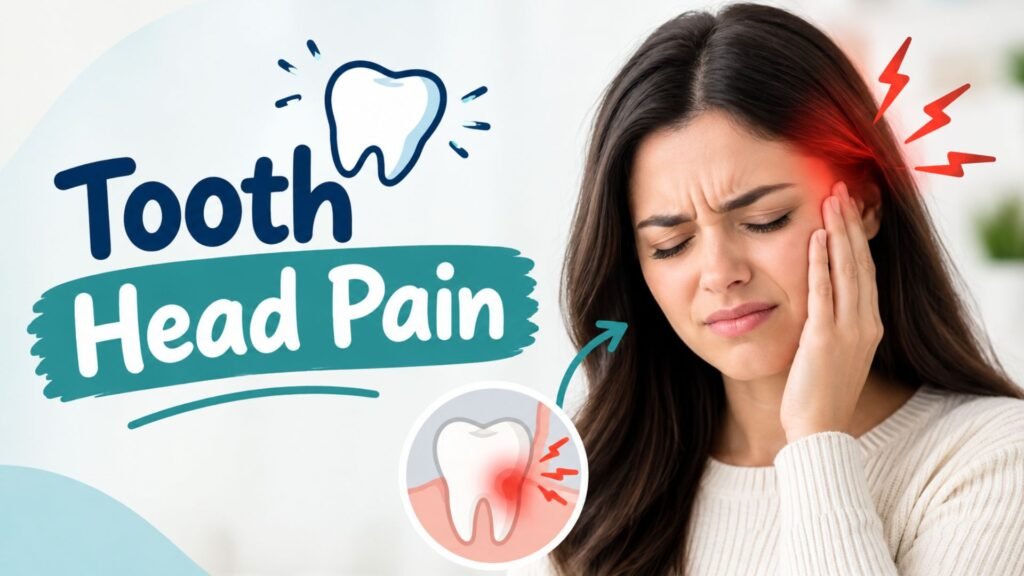
Can a bad tooth cause head pain? Yes, a damaged, infected, or badly decayed tooth can sometimes trigger pain that spreads beyond your mouth. You may notice tooth pain along with pressure, throbbing, or discomfort around your temples, forehead, jaw, or face. This happens because the nerves connecting your teeth, jaw, and head can send pain signals to nearby areas.
Problems such as cavities, an infected tooth, gum infections, and teeth grinding may contribute to head pain or dental-related headaches. However, not every headache comes from a dental problem. Understanding the connection between a bad tooth and head pain can help you recognize warning signs and know when it’s time to seek professional dental care.
Can a Tooth Infection Cause Headaches?
The short answer is yes. Can a tooth infection cause headaches? An infection inside or around a tooth can irritate nearby tissues and nerve pathways. Your teeth, jaw, face, and head share important sensory connections. The trigeminal nerve carries signals from many of these areas to your brain. Because of this network, your brain may not always identify the exact source. Instead, you may feel tooth pain around your cheek, temple, forehead, or jaw. This can create a confusing pattern that feels more like a headache than a dental problem.
Still, can a tooth cause a headache in every situation? No. Headaches have many possible causes. Migraine, dehydration, poor sleep, sinus disease, stress, and muscle tension can all contribute. Likewise, dental-related headaches may come from grinding or jaw strain rather than infection. Therefore, look at the full symptom pattern. A painful tooth, fever, swelling, bad taste, or pain when biting makes a dental source more likely. A proper dental evaluation can help separate these possibilities.
How a Tooth Infection Can Lead to Head Pain
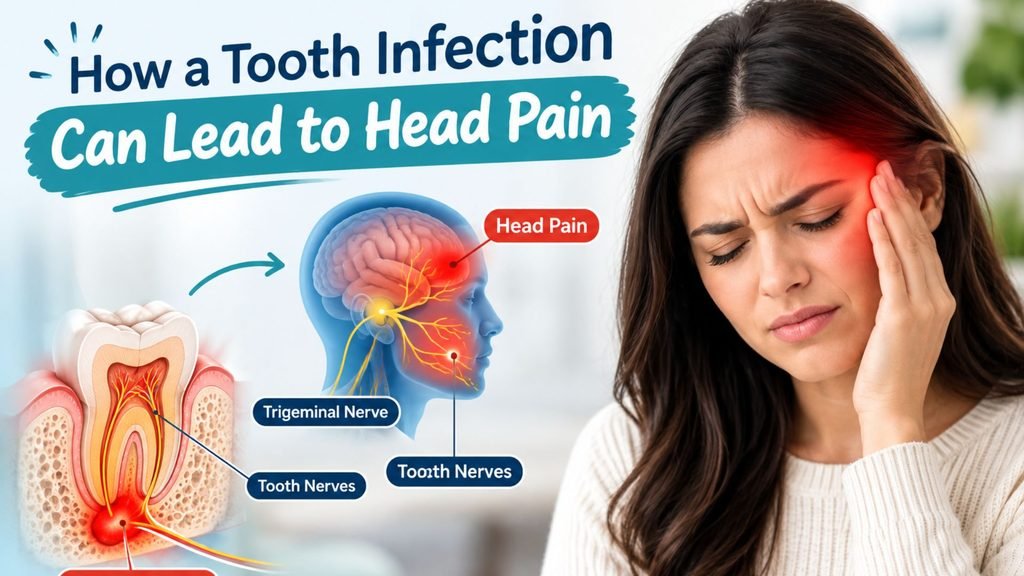
An infection begins locally, but its effects aren’t always local. Bacteria can enter damaged tooth tissue after decay, cracks, or trauma. As the infection progresses, inflammation develops around the tooth. This can irritate surrounding tissues and create pressure. The result may include head pain, facial tenderness, or throbbing tooth pain. Some people notice stronger discomfort when lying down or chewing. Others feel a steady ache that seems to spread toward the temple. The exact pattern depends on the tooth involved and how far inflammation has progressed.
So, how tooth infections cause headaches comes down to anatomy, inflammation, and pain signaling. A tooth doesn’t send a separate “tooth pain” message that the brain always localizes perfectly. Instead, signals travel through connected nerve pathways. This explains why does tooth pain spread to my head for some patients. A deep infection can also inflame tissues around the root. That inflammation can make ordinary pressure feel surprisingly painful. The discomfort may then become persistent rather than occasional.
The Role of Dental Nerves
Your tooth nerves sit inside the pulp at the center of each healthy tooth. These nerves connect with larger branches of the trigeminal system. When decay reaches the pulp, inflammation can activate those nerve fibers intensely. The resulting signal may feel sharp, burning, throbbing, or deep. This explains how are headaches and tooth pain connected through shared sensory pathways.
Inflammation and Pressure
Inflammation can make an infected area feel tight and tender. Pressure may build around the root or nearby tissues. That pressure can amplify dental infection symptoms and make chewing uncomfortable. If swelling develops, you may also notice gum swelling or facial tenderness. These changes don’t mean every headache comes from infection, though.
Referred Pain From an Infected Tooth
Referred pain happens when your brain interprets signals from connected areas as coming from another location. An infected tooth may therefore create tooth pain that radiates to the head. You might feel discomfort near your temple or cheek instead of directly over the tooth. This confusing pattern often delays dental care.
Common Dental Problems That Can Cause Headaches
Infection isn’t the only dental source of head discomfort. Several dental problems can affect the muscles, nerves, gums, and jaw. For example, cavities may cause pain once decay reaches deeper tooth layers. Gum inflammation can also create soreness. Meanwhile, grinding and clenching can overload the jaw. These conditions can produce dental causes of headaches without an active tooth infection. Finding the correct cause prevents unnecessary treatment and helps you get relief sooner.
A useful clue is what triggers the discomfort. Pain caused by decay may react to temperature or pressure. Grinding often creates morning headaches and jaw soreness. Gum disease may cause bleeding or swollen gums. An abscess can produce intense pain with swelling or fever. Your symptoms don’t always fit neatly into one box. That’s why a dental examination can be valuable when pain continues.
Tooth Infections and Dental Abscesses
A tooth abscess forms when infection creates a pocket of pus around a tooth. An abscessed tooth may cause severe pain, tenderness, swelling, and a bad taste. The pain can spread into nearby facial areas. Dental abscesses need prompt professional treatment because the infection can worsen.
Severe Tooth Decay
A small cavity may cause little discomfort at first. A deep cavity can eventually reach the pulp where nerves and blood vessels sit. Once that happens, pain may become spontaneous or severe. Can cavities cause headaches? They can contribute to head discomfort when decay irritates the tooth’s inner tissues. Persistent symptoms deserve dental evaluation.
Gum Infections
Healthy gums shouldn’t remain swollen, tender, or repeatedly bleed. Gum disease can cause inflammation around the teeth. More advanced disease can affect supporting tissues and create persistent oral discomfort. Can gum disease cause headaches? Oral inflammation may contribute to facial discomfort, although a headache isn’t a specific sign of gum disease.
Impacted Wisdom Teeth
Wisdom teeth can cause problems when they lack enough space to erupt normally. Food and bacteria may collect around partially erupted teeth. This can cause local inflammation, tenderness, or jaw pain. Some people also notice discomfort around the ear or temple. A dentist can use an examination and imaging to determine whether an impacted tooth contributes to symptoms.
Teeth Grinding and Jaw Problems
Repeated teeth grinding can strain the chewing muscles and jaw joints. Daytime jaw clenching can create a similar effect. The TMJ, or temporomandibular joint, connects your lower jaw to your skull. When this system becomes overloaded, headaches and facial soreness can develop. Can TMJ cause headaches? Yes, jaw disorders can contribute to headache symptoms in some people.
What Does a Tooth Infection Headache Feel Like?
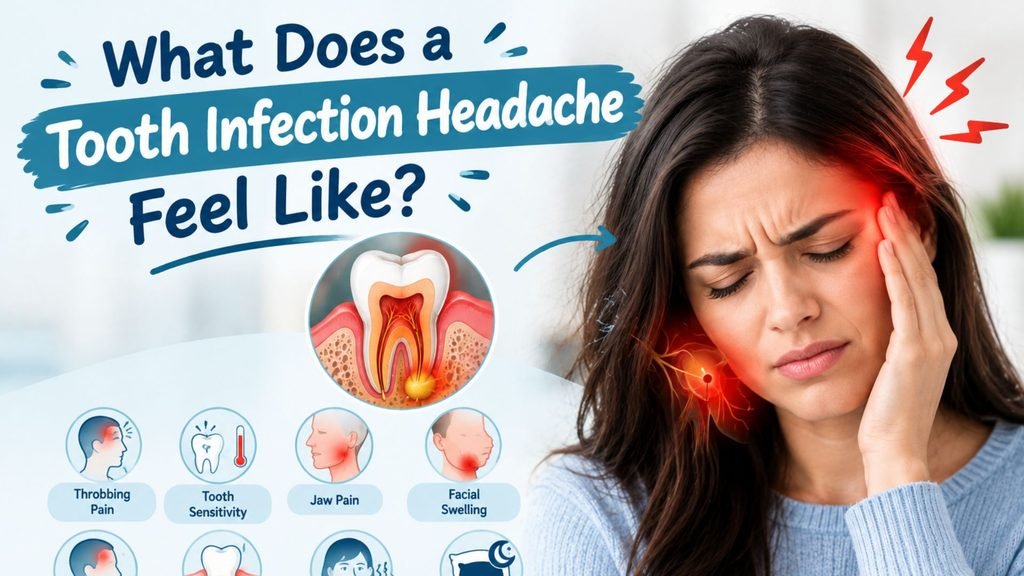
A dental headache doesn’t have one universal pattern. Some people experience throbbing pain in tooth and head at the same time. Others feel a dull ache near one temple or cheek. Pain may worsen when chewing, biting, touching the tooth, or lying down. You may also notice tooth sensitivity to hot and cold. These symptoms become more concerning when they occur with swelling, fever, pus, or a persistent bad taste.
One particularly useful clue is location. Persistent tooth pain and headache often deserves dental attention when both symptoms remain on the same side. You might also notice pain when biting down on one tooth. However, pain location alone cannot confirm an infection. Headache disorders can overlap with dental symptoms. Your dentist may need to examine the tooth and surrounding structures before identifying the cause.
| Symptom | What It May Suggest |
| Throbbing tooth pain | Pulp or surrounding tissue irritation |
| Pain when chewing | Tooth or supporting tissue problem |
| Facial swelling | Possible spreading dental infection |
| Fever with dental pain | Possible systemic involvement |
| Temperature sensitivity | Decay or irritated dental pulp |
| Jaw soreness | Grinding, TMJ issues, or infection |
| Nasal congestion and pressure | Possible sinus involvement |
Tooth Infection or Sinus Infection: How Can You Tell the Difference?
The upper back teeth sit close to the maxillary sinuses. Because of that relationship, sinus pressure can sometimes feel like upper tooth pain. At the same time, an upper tooth infection can create symptoms that resemble sinus trouble. This overlap makes sinus infection or tooth infection difficult to distinguish without careful evaluation. Nasal congestion and facial pressure point toward sinus disease. A specific painful tooth, swelling, or pain when biting may point toward a dental cause.
Another clue involves the number of teeth affected. Sinus inflammation can create pressure across several upper teeth. A dental infection often centers on one particular tooth. However, these patterns aren’t absolute. If you’re wondering how to tell if tooth pain is from a sinus infection, consider the complete picture. Nasal symptoms, recent respiratory illness, tooth sensitivity, swelling, and chewing pain all provide useful clues. A dentist can help rule out a dental source.
Symptoms of a Tooth Infection
Common symptoms of a tooth infection include intense toothache, sensitivity, pain with pressure, swelling, and a bad taste. You may notice swelling around an infected tooth or tenderness in the surrounding gum. Fever can also occur. A dental abscess should receive urgent professional attention rather than watchful waiting.
Symptoms of a Sinus Infection
A sinus infection can cause nasal congestion, facial pressure, drainage, reduced smell, and discomfort around the cheeks or forehead. Upper teeth may feel sore because their roots sit near sinus spaces. Unlike many dental infections, sinus symptoms often involve the nose and several nearby facial areas.
Why Upper Tooth Infections Can Feel Like Sinus Pain
Upper molar roots can sit close to the maxillary sinus. Inflammation in either area may therefore create overlapping sensations. Tooth infection and sinus pressure can occur together in some cases. If dental pain remains focused around one tooth, a dental examination can help identify the source.
Warning Signs That a Tooth Infection Needs Urgent Attention
Certain symptoms should change your response from “wait and see” to “get help.” Signs of a tooth abscess can include intense pain, facial or jaw swelling, fever, difficulty chewing, and a bad taste. You may also notice swollen gums or tender lymph nodes. An abscess doesn’t reliably disappear on its own. The underlying infection needs appropriate dental treatment.
The most serious warning signs involve breathing, swallowing, speaking, or significant facial swelling. Eye swelling or sudden vision problems also require urgent medical attention. If you’re asking when tooth pain requires a dentist, persistent or worsening pain is a strong reason to arrange an appointment. Likewise, seek dental advice promptly when pain that wakes you up at night keeps returning.
How Dentists Diagnose the Cause of Tooth Pain and Headaches
Finding the cause starts with your story. Your dentist will usually ask when symptoms began and what makes them worse. They may ask about temperature sensitivity, chewing, grinding, swelling, and previous dental work. A dental examination for tooth pain can then narrow down the possibilities. The dentist may tap teeth, test their response, inspect your gums, and examine your bite. These simple tests provide important clues about the painful structure.
Imaging can add another layer of information. Dental X-rays may show decay, bone changes, impacted teeth, or infection around a root. In selected cases, three-dimensional imaging may provide more detail. Dentists don’t need every type of scan for every patient. The appropriate imaging depends on the clinical findings. A broader evaluation may also consider the jaw and sinus area when symptoms overlap.
Dental Examination
During an examination, your dentist checks the teeth, gums, bite, and surrounding tissues. They may compare the painful tooth with neighboring teeth. This helps identify unusual responses. A focused examination can also reveal headache caused by dental problems when the symptoms point toward a specific oral source.
Dental X-Rays and Imaging
X-rays can reveal problems hidden below the visible tooth surface. They may show deep decay, changes around a root, bone loss, or an impacted tooth. Advanced imaging may help when anatomy is complex. Imaging supports the examination rather than replacing it.
Checking the Teeth, Gums, Jaw, and Sinuses
Dental pain can involve several nearby structures. Your dentist may check gum health, jaw movement, bite pressure, and signs of clenching. When symptoms resemble sinus disease, the clinical picture matters even more. This broader approach helps avoid treating the wrong source.
Treatment Options for Tooth Infection and Related Headaches
The best treatment for tooth-related headaches focuses on the condition causing the pain. If infection comes from inside the tooth, the dentist may recommend a root canal. If the tooth cannot be saved, extraction may become necessary. Gum disease may require periodontal treatment. Grinding may call for a night guard and behavior changes. The goal isn’t simply to hide the headache. The goal is to address its source.
Pain control can support treatment while the underlying problem is addressed. Current American Dental Association guidance supports non-opioid options for many forms of acute dental pain. NSAIDs such as ibuprofen or naproxen can be effective when medically appropriate. Acetaminophen may also be used in suitable patients. Your health history matters, so follow label directions and professional advice.
Treating the Infected Tooth
Treatment depends on where the infection began and whether the tooth can be restored. A dentist may remove infected tissue, drain an abscess, restore the tooth, or recommend extraction. Dental treatment for headaches should therefore target the underlying dental condition rather than the headache alone.
Root Canal Treatment
A root canal for tooth infection removes diseased pulp from inside the tooth. The dentist cleans and shapes the internal space before sealing it. A restored tooth may then need a dental crown for added protection. Root canal treatment can preserve a natural tooth when appropriate.
Tooth Extraction When Necessary
Some teeth become too damaged to restore predictably. In those cases, extraction may provide a path toward resolving infection and pain. Your dentist can discuss replacement choices after healing. The decision depends on tooth structure, infection, function, and overall oral health.
Antibiotics and When They May Be Used
Antibiotics aren’t automatically required for every dental infection. The ADA recommends prioritizing definitive dental treatment for many localized pulpal and periapical conditions. Antibiotics may become appropriate when systemic involvement or other specific clinical factors are present. Never use leftover antibiotics without professional guidance.
Managing Pain During Recovery
Pain management can make dental recovery easier. The right medication depends on your age, medical history, allergies, kidney or liver health, pregnancy status, and other medicines. For many adults, NSAIDs with or without acetaminophen can provide effective acute dental tooth pain relief when used appropriately.
How to Manage Toothaches and Headaches at Home
Home care can provide temporary headache relief while you arrange dental care. Keep the mouth clean with gentle oral hygiene and avoid foods that trigger sensitivity. You can also use a cold compress externally if swelling or soreness makes it comfortable. Drink water and avoid placing aspirin directly against your gums. That old remedy can irritate tissue instead of solving the problem.
For short-term tooth pain relief, follow the directions on an appropriate over-the-counter medicine. The ADA’s current guidance supports NSAIDs such as ibuprofen or naproxen for many adults and adolescents with toothache when dental care isn’t immediately available. However, don’t let temporary relief create false confidence. If infection is present, home measures don’t remove the infected tissue or abscess.
How to Prevent Tooth Infections and Related Headaches
Good prevention starts long before the first painful tooth appears. Regular brushing, cleaning between teeth, fluoride exposure, and a balanced diet all support oral health. A consistent dental checkup can also catch small problems before they become larger ones. These habits are central to preventing tooth pain and headaches because they reduce the chance of untreated decay and gum disease.
Your daily habits matter too. If you clench your jaw while working or grind your teeth at night, tell your dentist. Stress management may help reduce unnecessary muscle tension. A properly fitted night guard may protect teeth in selected cases. Learning how to prevent dental-related headaches often means addressing both oral health and jaw habits together.
Maintain Daily Oral Hygiene
Strong oral hygiene helps control plaque around teeth and gums. Brush twice daily with fluoride toothpaste and clean between your teeth regularly. These habits reduce the risk of cavities and gum disease. They also make it easier to spot changes before they become painful.
Schedule Regular Dental Checkups
A routine dental checkup allows your dentist to inspect areas you can’t easily see. Early cavities, damaged fillings, gum problems, and other concerns may not hurt immediately. Finding them early can make treatment simpler and less disruptive.
Treat Cavities and Dental Problems Early
A minor cavity can become a much deeper problem when ignored. Early treatment can prevent decay from reaching the pulp. If you notice new sensitivity or discomfort, don’t assume it will disappear permanently. Early attention can prevent a larger dental emergency.
Protect Your Teeth From Grinding and Injury
Sports injuries and nighttime grinding can damage teeth over time. If you experience nighttime teeth grinding and headaches, mention it during your dental visit. Likewise, jaw clenching and tension headaches may improve when the underlying muscle strain is addressed.
Frequently Asked Questions About Tooth Infections and Headaches
The questions below address common concerns about dental infections and head pain. They also help clarify when symptoms may require professional care. Remember that symptoms can overlap between dental disease, sinus problems, TMJ disorders, and primary headaches. A dentist or physician can help when the cause remains uncertain.
A useful rule is simple: worsening pain deserves attention. If symptoms persist despite temporary measures, arrange an evaluation. The same applies when swelling, fever, or drainage appears. These signs can indicate a condition that needs treatment rather than more home remedies.
Can a tooth infection cause a migraine?
A tooth infection can cause referred head pain, but that doesn’t mean every dental headache is a migraine. Migraine is a distinct neurological condition with its own symptom pattern. If you experience recurring severe headaches, your dentist and physician may both be useful.
Can a tooth infection cause pressure in the head?
Yes, an infected tooth can create pressure-like facial discomfort through inflammation and referred pain. Can a tooth infection cause headaches with this sensation? It can. However, sinus disease and other conditions can create similar pressure. The surrounding symptoms help determine the likely source.
Can a tooth infection cause pain behind the eye?
Dental and sinus structures sit close to several facial nerves. As a result, upper dental problems can sometimes create nearby facial discomfort. Severe swelling near the eye, vision changes, or significant facial swelling require urgent medical assessment rather than home treatment.
Can a tooth infection go away on its own?
A true dental abscess shouldn’t be expected to disappear permanently without appropriate treatment. Pain may temporarily decrease if pressure changes or drainage occurs. That improvement doesn’t prove the infection has resolved. Professional evaluation remains important because untreated infection can continue or return.
When Should You See a Dentist for a Headache and Tooth Pain?
Knowing when to see a dentist for a headache can prevent unnecessary suffering. A dental appointment is especially sensible when head pain occurs with a painful tooth, swelling, temperature sensitivity, chewing pain, or a bad taste. These combinations make a dental source more plausible. Likewise, a headache caused by dental problems may improve only after the underlying tooth or gum condition receives treatment.
Don’t wait for severe symptoms before seeking help. A small cavity can become a deep infection. A mild jaw habit can become persistent muscle pain. If you’re asking can tooth pain cause headaches, the answer depends on the cause of your tooth pain. A proper examination can provide that missing piece. The sooner the source becomes clear, the sooner you can choose appropriate treatment.
