
What Are the 7 Healing Frequencies? Benefits of Sound Healing Explained
What Are the 7 Healing Frequencies? is a common question among people exploring natural ways to relax, manage stress, and improve their well-being. These frequencies are often linked to sound healing, a practice that uses sound vibrations, music, and tones to support relaxation and emotional balance. The seven Solfeggio frequencies are commonly associated with different benefits, such as calmness, meditation, and personal growth.
Some people listen to these tones during yoga, before sleep, or as part of a daily wellness routine. However, scientific evidence supporting specific healing frequencies remains limited. Understanding how these sounds may affect your mood can help you decide whether to include them in your wellness routine.
1. What Are the 7 Healing Frequencies?
The question what are the 7 healing frequencies refers to seven tones commonly used in modern sound healing practices. These tones are 396 Hz, 417 Hz, 528 Hz, 639 Hz, 741 Hz, 852 Hz, and 963 Hz. The unit hertz (Hz) measures how many sound wave cycles occur each second. A higher frequency creates a higher-pitched tone.
Many wellness traditions connect these tones with the seven chakras of the body, which are described in Indian spiritual traditions as energy centers. These links form part of the traditional explanation for chakra healing frequencies. People often choose a tone based on its symbolic meaning or the mood they want to create. Still, science hasn’t established that these exact tones balance chakras or cure health problems.
2. What Are the 7 Solfeggio Frequencies and Their Benefits?
The Solfeggio frequencies are a group of tones used in modern meditation and sound healing practices. People associate each tone with a different emotional or spiritual purpose. The healing frequencies and their benefits are often explained through chakra traditions. However, these associations are beliefs rather than proven medical effects. The following table summarizes the seven tones and their commonly reported meanings.
| Frequency | Traditional association | Commonly claimed benefit |
| 396 Hz | Root chakra | Grounding and releasing fear |
| 417 Hz | Sacral chakra | Change and emotional release |
| 528 Hz | Solar plexus chakra | Confidence and transformation |
| 639 Hz | Heart chakra | Love and connection |
| 741 Hz | Throat chakra | Expression and clarity |
| 852 Hz | Third eye chakra | Intuition and awareness |
| 963 Hz | Crown chakra | Spiritual connection |
396 Hz: Root Chakra and Grounding
The 396 Hz frequency is traditionally linked with the root chakra. This energy center represents stability, safety, and connection to the present moment. Some listeners use this tone during grounding exercises when they feel overwhelmed. The 396 Hz root chakra frequency may create a calming listening experience, but researchers haven’t proven that it directly removes fear or anxiety.
417 Hz: Sacral Chakra and Emotional Change
The 417 Hz frequency is associated with the sacral chakra, which symbolizes creativity, pleasure, and emotional expression. Some people listen to this tone while journaling or reflecting on difficult experiences. The 417 Hz sacral chakra frequency is also marketed for releasing negative energy. These claims reflect spiritual traditions, not established treatments for trauma or sleep problems.
528 Hz: Solar Plexus Chakra and Transformation
The 528 Hz frequency is often called the love frequency. In chakra traditions, it connects with personal confidence, inner strength, and transformation. The 528 Hz benefits promoted online include relaxation and emotional balance. A small 2018 study examined music at this frequency in nine healthy adults, but such a small sample cannot establish broad health benefits. Read the published study.
639 Hz: Heart Chakra and Connection
The 639 Hz frequency is traditionally associated with the heart chakra. This chakra symbolizes compassion, forgiveness, and relationships. Some listeners choose this tone during quiet reflection or meditation focused on connection with others. The 639 Hz heart chakra frequency may provide a meaningful personal ritual. However, evidence does not show that this specific tone improves relationships or directly changes emotional responses.
741 Hz: Throat Chakra and Self-Expression
The 741 Hz frequency is linked with the throat chakra, which represents communication and self-expression. People sometimes include it in meditation sessions when they want to reflect on their thoughts or express themselves more clearly. The 741 Hz throat chakra frequency is also advertised for detoxification and physical healing. There is no reliable evidence that listening to this tone removes toxins from the body.
852 Hz: Third Eye Chakra and Awareness
The 852 Hz frequency is traditionally connected with the third eye chakra. This energy center represents intuition, awareness, and inner reflection. Some people play this tone during mindfulness sessions because they find it pleasant or calming. The 852 Hz third eye chakra frequency may support a personal meditation routine, but claims about improving eyesight or unlocking special intuitive abilities remain unproven.
963 Hz: Crown Chakra and Spiritual Connection
The 963 Hz frequency is associated with the crown chakra, which represents spiritual awareness and a sense of connection. Some listeners use it during contemplative practices or quiet moments before sleep. The 963 Hz crown chakra frequency may hold spiritual meaning for those who value chakra traditions. Still, science has not established that this tone increases consciousness or produces unique physical benefits.
3. What Is Sound Healing and How Does It Work?

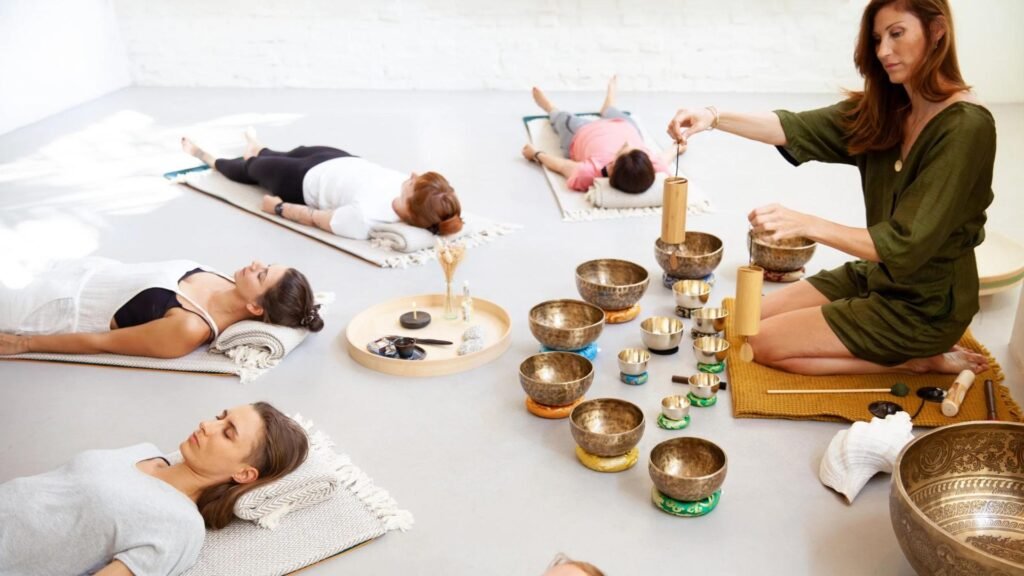
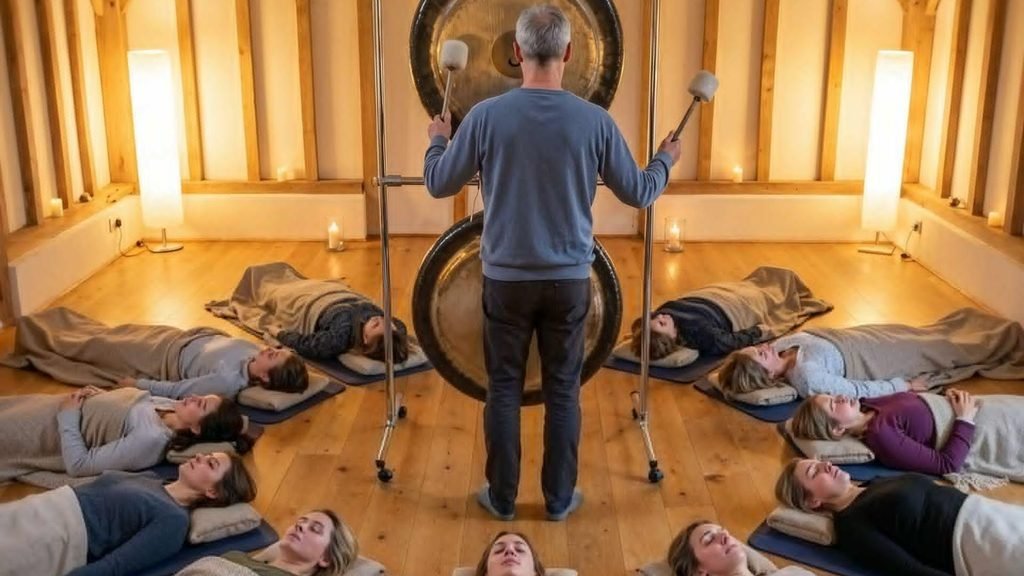
What is sound therapy? It is a broad term for using music, tones, rhythm, or other sound-based methods to support health and well-being. Sound healing often refers to practices such as sound baths, singing bowl sessions, and guided listening. Practitioners may use sound healing instruments such as gongs, chimes, drums, and tuning forks. These methods can create a peaceful setting that encourages people to pause and relax.
How does sound healing work?
The answer may involve attention, emotion, and the body’s response to a calming environment. Music activates brain areas involved in hearing, movement, memory, and emotion. A quiet listening session may also help you slow down and focus on your breathing. This explains why sound vibration therapy can feel relaxing without proving that a special tone repairs cells or balances the body’s energy field. The experience depends on the sound, setting, and listener.
Common Sound Healing Instruments
Tibetan singing bowls produce rich tones that change as the bowl vibrates. Gongs create broad, layered sounds, while tuning forks produce more focused tones. Chimes and drums add different textures to a session. During singing bowl meditation, a practitioner may strike or gently rub a bowl to create a sustained sound. These instruments differ in pitch, volume, and tone, so the listening experience varies.
What Happens During a Sound Healing Session?
A typical session begins with participants sitting or lying in a comfortable position. The practitioner then plays instruments or recordings for a set period. You may close your eyes, breathe slowly, or simply listen. Some people feel calm, while others notice wandering thoughts or no clear change. A session doesn’t need to produce a dramatic experience to be worthwhile as a personal relaxation practice.
4. Do Healing Frequencies Actually Work? What Does Research Say?
Do healing frequencies actually work? The answer depends on what you mean by healing. Research suggests that some music-based practices may help with stress, anxiety, pain, or mood in certain settings. However, evidence for general music-based interventions does not prove that every Solfeggio tone has a unique effect. Scientific research on sound healing remains limited in several areas, especially when studies examine specific frequencies or make claims about physical healing.
A 2023 overview of singing bowl research reported possible benefits for mood, tension, and well-being, while noting the need for more research. Another observational study involving 62 participants found improvements in reported tension and mood after singing bowl meditation. These results are encouraging, but they don’t prove that the bowls cured a condition or that the same result will occur for everyone. See the singing bowl research overview and the observational study.
Can healing frequencies reduce stress?
Music may help some people feel calmer by giving their attention a gentle focus. The US National Center for Complementary and Integrative Health summarizes research showing potential benefits from music-based interventions for stress and anxiety, while also noting limitations in the evidence. These findings support the use of enjoyable music as a possible wellness tool. They do not establish that 396 Hz, 528 Hz, or another exact tone is uniquely effective. Explore the evidence from NCCIH.
What Are the Limits of Sound Healing Research?
Many sound healing studies include small groups, short sessions, or subjective reports from participants. Researchers may also use different instruments and methods, making results difficult to compare. People know when they hear a sound, which can influence how they report their experience. Larger, well-designed studies are needed to understand which methods help, for whom, and for how long. Sound healing should not replace medical treatment or professional mental health care.
5. What Are the Natural Frequencies of the Human Body?
Your body relies on many rhythms and signals, but it doesn’t have one universal healing frequency. Your heart beats, your lungs move air, and your brain produces electrical activity. These processes operate in different ways and change with sleep, exercise, stress, and health. Understanding these differences helps explain why claims about healing vibrations need careful interpretation.
How sound frequencies affect the brain
The phrase how sound frequencies affect the brain covers several different processes. Sound waves enter the ears and trigger signals that the brain interprets as sound. Music can also engage areas involved in attention and emotion. Brain waves, however, are patterns of electrical activity rather than ordinary sound waves. A 528 Hz tone doesn’t automatically make your brain operate at 528 Hz or place you in a particular mental state.
Understanding Brain Wave Frequencies
Scientists commonly describe brain activity using delta, theta, alpha, beta, and gamma frequency bands. Delta activity is often prominent during deep sleep, while alpha activity can appear during relaxed wakefulness. Theta activity occurs in several states, including drowsiness, and beta activity often accompanies alert thinking. Gamma activity is linked with some forms of information processing. These bands describe electrical signals measured from the brain, not seven healing tones or chakra frequencies.
Do Human Cells Vibrate at Healing Frequencies?
Cells and tissues have physical properties and respond to mechanical forces in complex ways. However, that fact doesn’t prove that listening to a particular audio tone repairs damaged cells. Claims about therapeutic sound vibrations producing specific biological changes require direct, reliable evidence. It’s important to distinguish established physical processes from wellness claims that have not been confirmed by controlled research.
6. What Is the Best Frequency for the Human Body?
There isn’t one scientifically established best frequency for the entire human body. Your preferred sound may depend on your goal, mood, hearing, and surroundings. Some people enjoy low, gentle tones, while others prefer nature sounds or familiar music. When exploring frequencies for relaxation, focus on comfort and how the sound affects your experience rather than assuming a particular number guarantees a health benefit.
Best Frequencies for Relaxation, Sleep, and Meditation
The best sound frequency for relaxation is not necessarily the same for everyone. If soft instrumental music helps you unwind, it may be a useful part of your evening routine. For sleep, a dark room, a regular bedtime, and reduced noise may matter more than a specific tone. During meditation, choose a sound that supports your attention without becoming distracting. There is no strong evidence that one Solfeggio frequency works best for every purpose.
What About the 432 Hz Healing Frequency?
The 432 Hz healing frequency is popular in wellness recordings and is often compared with music tuned to the standard A4 reference of 440 Hz. These numbers describe tuning references, not a complete musical experience. A recording tuned to 432 Hz may sound slightly different from one tuned to 440 Hz, but research has not established that 432 Hz provides superior medical benefits. Choose the version you enjoy listening to most.
7. What Is the Most Powerful Frequency for Healing?
The best frequency for healing depends on what you mean by healing. If you’re seeking a calming experience, you may prefer one tone over another. However, no single frequency has been proven to cure disease, repair tissue, or reliably produce a specific emotional response. Claims that 528 Hz is the most powerful frequency come largely from popular sound healing traditions and marketing rather than strong clinical evidence.
Is 528 Hz Better Than 432 Hz?
Both 528 Hz and 432 Hz appear frequently in sound healing content, but they refer to different things. The first is often presented as a specific healing tone, while the second commonly describes a musical tuning reference. A small study of nine adults examined music containing 528 Hz and reported changes in some stress-related measures. Its size and design limit the conclusions researchers can draw. You can try both recordings and decide which you find more pleasant without assuming one is medically superior.
8. What Are the Potential Benefits of Sound Healing?
The benefits of sound healing may include relaxation, a sense of emotional comfort, and a structured opportunity to pause during a busy day. Some research on music-based interventions also suggests possible benefits for stress, anxiety, and pain in certain settings. Still, outcomes depend on the person and the method used. The strongest evidence relates to broader music-based practices rather than claims that each exact frequency produces a unique health effect.
Sound Healing for Stress and Emotional Well-Being
A quiet sound session may help you step away from daily distractions and focus on the present moment. This is one reason people explore sound healing for stress relief and sound healing for anxiety. For some listeners, slow music or singing bowls provide a comforting backdrop for breathing and reflection. Others may prefer silence, walking, or guided meditation. Sound can support a wellness routine, but persistent anxiety deserves appropriate professional care.
Sound Healing and Sleep Quality
Some people use sound healing for better sleep because gentle music can make a bedtime routine feel more relaxing. Research on music and sleep has produced mixed findings, so the results shouldn’t be treated as a guarantee. Try a comfortable volume and choose sounds that don’t keep you alert. If sleep problems continue or affect your daily life, talk with a healthcare professional rather than relying on a frequency recording alone.
Sound Healing for Pain and Mental Clarity
Research on music-based interventions suggests that music may help some people manage perceived pain and emotional distress. That doesn’t mean sound frequencies can repair injuries or replace pain treatment. Likewise, quiet listening may give you time to reflect, but claims of improved memory or mental performance need more evidence. The practical value may come from relaxation and attention rather than a special healing property of a particular tone.
9. How to Use Healing Frequencies in Your Daily Routine
You don’t need expensive equipment to explore how to use healing frequencies for meditation. Start with a recording you enjoy and set aside a few quiet minutes. Sit comfortably, lower distractions, and breathe naturally while listening. Notice whether the sound helps you settle or makes you uncomfortable. A simple routine can be enough to explore sound healing for mind and body balance without expecting dramatic results.
A Simple 10-Minute Sound Healing Routine
Choose a quiet place where you can relax without interruption. Play a gentle recording through a speaker at a comfortable volume. Spend a few minutes noticing the sound and allowing your attention to return whenever your mind wanders. Finish by checking how you feel. You can repeat this practice when it suits your schedule, but no specific session length has been proven necessary for Solfeggio frequencies.
Safety Tips for Listening to Healing Frequencies
Keep your listening volume comfortable, especially when using headphones. Stop if a sound causes discomfort, dizziness, or distress. People with sound sensitivity may prefer quiet music or shorter sessions. If you’re using sound to cope with ongoing pain, anxiety, or sleep problems, seek appropriate medical advice. Sound-based practices can complement suitable care, but they shouldn’t replace proven treatment.
10. Conclusion: Are the 7 Healing Frequencies Worth Trying?
The 7 healing frequencies have become popular among people interested in meditation, mindfulness, and spiritual wellness. Each tone has a traditional association, from grounding with 396 Hz to spiritual awareness with 963 Hz. These meanings may help people build a personal relaxation ritual. However, the specific healing claims surrounding individual frequencies remain unproven, and research into sound-based practices is still developing.
If you’re curious, try a few recordings and notice which sounds you enjoy. You don’t need to believe every claim to appreciate a peaceful listening session. Research suggests that music and singing bowl meditation may support relaxation and well-being for some people. Keep your expectations realistic, listen safely, and seek professional care when health concerns need attention. Sound healing works best as a personal wellness practice, not a substitute for medical treatment.
Frequently Asked Questions
What are the 7 healing frequencies and their benefits?
The seven commonly cited frequencies are 396 Hz, 417 Hz, 528 Hz, 639 Hz, 741 Hz, 852 Hz, and 963 Hz. Each has a traditional association with a chakra and a claimed emotional or spiritual benefit. Scientific evidence hasn’t confirmed that these specific tones produce those effects.
Are Solfeggio frequencies scientifically proven?
Research has explored singing bowl meditation, music-based relaxation, and some individual tones. However, there isn’t enough strong evidence to confirm that all Solfeggio frequencies provide unique healing benefits. Studies on general music interventions shouldn’t be treated as proof of every frequency-specific claim.
Can healing frequencies help with anxiety?
Calming music may help some people relax and manage feelings of stress. Research on music-based interventions suggests possible benefits in certain settings. However, a specific healing frequency isn’t an established treatment for anxiety disorders. Speak with a healthcare professional if anxiety affects your daily life.
Can I listen to healing frequencies while sleeping?
You can play quiet, comfortable sounds as part of a bedtime routine if they help you relax. Keep the volume low and avoid sounds that disturb your sleep. There is no established evidence that a particular Solfeggio frequency guarantees deeper or better sleep.
Is 528 Hz better than 432 Hz?
Neither frequency has been established as medically superior. The 528 Hz tone is often marketed for transformation and healing, while 432 Hz commonly refers to a musical tuning reference. Choose whichever sound you prefer rather than relying on claims of guaranteed health benefits.
