

Braces Pain Relief: 10 Tips to Ease Sore Teeth and Gums Fast
Your teeth ache. Your cheeks feel scraped. Even soft pasta seems like hard work. Sound familiar? Take a breath. This is normal after you get braces. Better yet, you can fix a lot of it at home. This guide gives you simple, safe braces pain relief that works.
You’ll learn why braces hurt and how long the soreness lasts. You’ll also get ten easy tips, meal ideas, and warning signs to watch for. Along the way we’ll cover Invisalign, kids, and teens. Grab a cold drink and read on. Your healthier smile is worth a few sore days.
Why Do Braces Hurt?
Braces work by pushing your teeth with gentle, steady force. That force makes shifting teeth move a tiny bit at a time. Your gums and the ligaments around each tooth feel the pressure. The result is a dull ache that many people compare to a bruise. It’s the sign that your orthodontic treatment is working. You’ll feel it most in your sensitive teeth and gums.
Pain also comes from the hardware itself. Brackets and wire ends can rub the inside of your cheeks and lips. Medical News Today notes that people usually feel pain when braces first go on and after regular tightening. Rubbing from a poking part can hurt too. Luckily, each cause has its own simple fix.
Pressure Pain vs. Rubbing Pain
Think of pressure pain as a deep, dull ache in your teeth. Rubbing pain feels sharper and sits on the soft tissue. A cotton swab helps you find the exact spot. Once you know the type, you can choose the right fix. The table below shows the difference at a glance.
| Type of Pain | What It Feels Like | Where You Feel It | Best Fix |
| Pressure pain | Dull, achy, like a bruise | Teeth and gums | Soft foods, cold, over-the-counter pain medicine |
| Rubbing pain | Sharp, scraped, stinging | Cheeks and lips | Orthodontic wax, warm salt water rinse |
How Long Does Braces Pain Last?
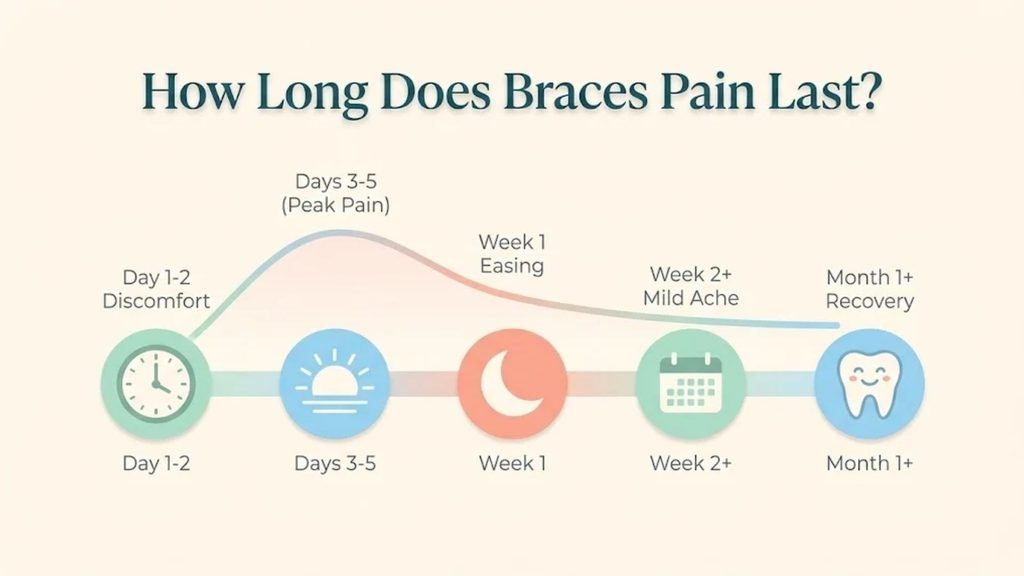
Most people feel the worst of it in the first few days. Soreness often lasts one to three days after your wires tightened. Visits usually happen every four to six weeks, according to NewMouth. So the ache comes in short waves. It’s strongest on day one or two. Then it fades as your mouth gets used to the new pressure.
Some people feel sore for up to a week. Orajel’s guide suggests checking in with your orthodontist if the pain lasts more than a few days. Do the same if it’s so strong that you can’t eat soft foods or sleep. Pain that gets worse instead of better isn’t part of the plan.
Pain Timeline Table
The first adjustment period feels the toughest. Later visits usually feel easier because your mouth toughens up. Here’s a simple timeline to guide you. Keep in mind that every mouth is different. Your own pattern may run shorter or longer than the examples below.
| Stage | Typical Soreness | What Helps Most |
| First 24 hours | Pressure and discomfort | Ice pack, soft foods |
| Days 2 to 3 | Peak soreness | Over-the-counter pain medicine, orthodontic wax |
| About one week | Easing off | Warm salt water rinse, good dental hygiene |
| After each tightening | Mild soreness for 1 to 3 days | Same tips as above |
10 Tips for Braces Pain Relief at Home
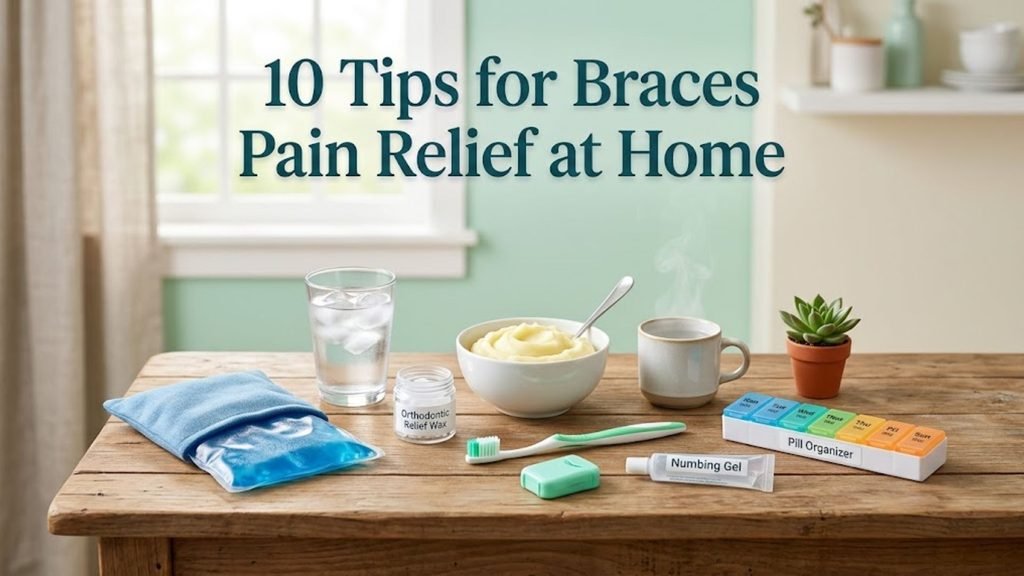
You don’t have to grit your teeth and wait. A few simple moves can take the edge off fast. The ten tips below mix medicine, cold, food, and mouth care. Try them together for the best braces pain relief. Some tips work in minutes. Others pay off over a few days.
Start with the easy wins. Keep a small “comfort kit” in your bag. Stay calm and give each tip a fair try. If pain keeps growing after a couple of days, call your orthodontist. That’s always the safest next step.
1. Take an Over-the-Counter Pain Reliever Early
Over-the-counter pain medicine can calm the ache. Many people take it before soreness peaks. Some orthodontists suggest taking it about an hour before your appointment. Ask yours first. Always read the instructions and follow the dosage instructions on the label. Don’t use it for long stretches. If you still need it after a couple of days, call your orthodontist.
2. Use an Ice Pack on Your Cheeks
Cold calms inflammation and helps numb the mouth. Wrap an ice pack in a thin towel. Hold it against the outside of your cheek for about ten minutes. Take breaks so your skin stays safe. It’s a great move for the first night. Plus it costs almost nothing.
3. Sip Cold Ice Water
No ice pack nearby? Grab a glass of cold ice water. Take slow sips and let the cold water wash over sore spots. The chill numbs your teeth and gums for a little while. Skip the crunchy ice cubes though. Chewing them can break brackets and add to the pain.
4. Eat Soft Foods
Chewing hurts when your teeth are tender. So switch to soft foods for a few days. Think soups, mashed potatoes, and cereal that’s soaked in milk. Avoid crunchy foods, hard candy, and gum. With traditional wire braces, these foods can also bend wires. Your teeth will thank you.
5. Cover Sharp Spots With Orthodontic Wax
Orthodontic wax is a lifesaver. It covers sharp ends and protects lips and cheeks from scraping. The wax is nontoxic wax, so a tiny swallow isn’t a worry. Mold a small ball over the bracket that bothers you. Remove it before you brush. Then put fresh wax on after meals.
6. Use an Oral Numbing Gel
Oral anesthetics can desensitize a sore patch for a short while. Brands like Orajel and Anbesol are common in US drugstores. Dab a little on with a clean finger or a cotton swab. Check the age limits on the label first. Never use more than the package says.
7. Rinse With a Warm Salt Water Rinse
A warm salt water rinse soothes sores and cuts inside your mouth. Stir half a teaspoon of salt into a glass of warm water. Swish gently for about thirty seconds. Then spit it out. You can repeat this a few times a day. It also helps keep gum inflammation down.
8. Try a Gentle Gum Massage
A gum massage can relax puffy tissue. Use a clean finger. Rub your gums in a slow circular motion. Keep the pressure light. Stop right away if it hurts more. Some people chill their finger on ice first for extra relief. Do it only long enough to calm the area.
9. Practice Good Dental Hygiene
Food gets stuck around brackets. That can lead to tooth decay and swollen gums. So brush, floss, and use mouth wash every day. Clean food particles out and clean thoroughly around every wire. Use a soft brush so you don’t irritate tender gums. Good dental hygiene also speeds healing.
10. Be Patient
This tip may be the hardest. Be patient with your mouth. Keep the big picture in mind. A beautiful smile is on its way. The aches last only a few days. Your new smile will last for life. Distract yourself with a movie or a good book. Time passes faster than you think.
How to Stop Braces Pain After Tightening
A tightening visit is when the soreness hits hardest. Your orthodontic appointment swaps or adjusts the wire. Pressure builds over the next few hours. You may feel fine in the chair and sore by dinner. That’s normal. The trick is to get ahead of it with a quick plan.
Plan your day before you go. Pack soft foods for later. Keep orthodontic wax and an ice pack ready at home. Eat something soft before the pain starts. Think of it like packing an umbrella before the rain. A little prep makes the evening far easier.
A Simple First-Night Routine
Here’s a plan you can follow after your visit. Follow the steps in order for the smoothest night. If your pain is stronger than expected, call your orthodontist in the morning. The table keeps it short and easy.
| Step | What to Do | Why It Helps |
| 1 | Eat a soft dinner like soup or mashed potatoes | Less pressure on teeth |
| 2 | Take pain medicine as the label says | Eases discomfort early |
| 3 | Hold an ice pack on your cheek | Calms inflammation |
| 4 | Do a warm salt water rinse | Soothes sores and cuts |
| 5 | Add orthodontic wax before bed | Protects lips and cheeks overnight |
Best Soft Foods and Easy Meals When Chewing Hurts

Eating well matters even when your mouth is sore. Skipping meals can leave you tired and cranky. So aim for foods that are soft and filling. Soups, mashed potatoes, oatmeal, and scrambled eggs are great picks. Smoothies and yogurt work well too. They give your teeth a break and still give you energy.
Some foods cause real trouble. Hard candy and gum can snap wires and loosen brackets. Crunchy foods like popcorn, chips, and raw carrots add pain. Sticky caramel pulls on braces. Avoid these during the first few days after you get braces. Most of them are fine again once the soreness fades. Your orthodontist can tell you which ones to skip for the whole treatment.
Soft Food Meal Table
Here’s a US-style meal plan for sore-mouth days. Mix and match the ideas. Cut everything into small pieces. Let hot foods cool first, because heat can bother sensitive teeth and gums.
| Meal | Easy Ideas | Skip These |
| Breakfast | Oatmeal, scrambled eggs, yogurt, cereal soaked in milk | Hard granola, bagels |
| Lunch | Tomato soups, mac and cheese, soft sandwiches | Chips, crusty bread |
| Dinner | Mashed potatoes, soft pasta, flaky fish, rice | Steak, corn on the cob |
| Snacks | Applesauce, pudding, smoothies, banana | Popcorn, nuts, hard candy |
How to Soothe Mouth Sores, Cuts, and Swollen Gums From Braces
Brackets can rub the inside of your cheeks and lips. That friction causes sores and cuts. Your gums may puff up too. Don’t ignore these spots. Cover the sharp spot with orthodontic wax. Then use a warm salt water rinse a few times a day. Most small sores heal in about a week.
Keep brushing gently. Swollen gums need clean teeth even more than normal gums do. Plaque left behind worsens gum inflammation. Use a soft brush and small circles. Floss with a floss threader or a water flosser. If a sore doesn’t heal after two weeks, show it to your orthodontist or dentist.
Braces Sore vs. Canker Sore vs. Cold Sore
Not every mouth sore comes from braces. A braces sore sits right where metal rubs. A canker sore is a small white or yellow ulcer inside the mouth. A cold sore appears outside the mouth on or near the lips. Cold sores are a different problem and need different care. If you’re unsure, ask a dentist or a doctor.
Braces Pain Relief for Aligners
Think Invisalign has no pain? Not quite. Aligners press on your teeth too. Each new set of aligners can bring a day or two of tight, achy soreness. Many people notice it most on the first night. The good news is that the pain is usually milder than with traditional wire braces. You also have fewer sharp edges to deal with.
The same tips still work. Reach for soft foods, an ice pack, and over-the-counter pain medicine as the label allows. Take out your aligners only for meals and to brush. Wear them as directed so your teeth stay on track. Some orthodontists suggest switching trays at night so you sleep through the first ache. Ask yours if that fits your plan.
How to Ease Soreness When You Switch Trays
Plan the switch for an evening when you can rest. Eat a soft dinner and take pain medicine if you need it and your label allows. Chew gently on aligner chewies if your orthodontist recommends them. They help the tray sit snugly. Keep your trays clean with a soft brush and cool water so they stay fresh.
Braces Pain Relief for Kids and Teens
Kids and teens often feel braces pain more sharply at first. Their mouths are busy growing and changing. A nervous child can make soreness feel bigger too. So give plenty of comfort and clear directions. Stay calm and talk through the plan. Explain that the ache is short and means the braces are working.
Safety matters most for children. Check age limits on every gel and medicine. Ask your orthodontist or pharmacist what suits your child’s age and weight. Follow the dosage instructions on the label. Never guess. Help your child brush and floss well, since good dental hygiene prevents tooth decay around braces.
A Braces Comfort Kit
A little kit makes school days easier. Stash it in a backpack or locker. Your child can fix small problems without a trip to the nurse. Here’s what to pack. Keep each item in a small zip bag.
| Item | What It Does |
| Orthodontic wax | Covers sharp spots |
| Travel toothbrush and floss | Cleans after lunch |
| Saltwater packets | Make a quick warm salt water rinse |
| Small ice pack | Soothes sore cheeks |
| Lip balm | Protects dry lips |
| Orthodontist’s phone number | Handy for urgent questions |
When Is Braces Pain Not Normal?
Soreness should ease with time. It shouldn’t grow worse after the first few days. Call your orthodontist if pain lasts more than a week. Call if a wire pokes into your cheek or a bracket comes loose. Watch for swelling in your face or a fever. These signs mean something else may be going on.
Most problems have a simple fix. Your orthodontist can clip a wire or replace a bracket. Don’t try to cut wires at home. For severe swelling, trouble breathing, or fever, seek urgent care right away. Better safe than sorry. Your orthodontic treatment works best when small issues get checked early.
Warning Signs Table
Use this table as a quick guide. It isn’t a diagnosis. When in doubt, make the call. Your orthodontist’s team hears these questions every day.
| Sign | What It Might Mean | What to Do |
| Pain beyond one week | Needs a check | Call your orthodontist |
| Poking wire | Wire has shifted | Cover with orthodontic wax and call |
| Loose bracket | Bracket has come off | Call for a repair visit |
| Swollen face or fever | Possible infection | Seek urgent care |
| Sore that won’t heal | Needs a check | See your dentist or orthodontist |
Frequently Asked Questions About Braces Pain Relief
Quick answers can save you a lot of worry. Below are the questions people ask most about sore teeth and gums. Each answer is short and practical. Rules differ a little from one office to the next. When in doubt, ask your own orthodontist.
How long do braces hurt after tightening?
Most people feel sore for one to three days after their wires tightened. A few feel it for up to a week. If pain lasts longer or gets worse, call your orthodontist. Soft foods and cold packs help in the meantime.
What is the fastest way to relieve braces pain?
Cold and over-the-counter pain medicine work quickly for most people. An ice pack, cold ice water, and soft foods add extra comfort. Use orthodontic wax for rubbing pain. Always follow the label.
Can I take ibuprofen or acetaminophen for braces pain?
Many people use these common pain relievers. Follow the dosage instructions on the label. Check with your orthodontist, doctor, or pharmacist first if you have health conditions or take other medicine. Don’t use them for long stretches.
Does ice help sore teeth from braces?
Yes. Cold helps numb the mouth and reduces inflammation. Hold an ice pack against your cheek or sip cold water. Don’t chew ice. It can break brackets and wires.
Why do my braces hurt more at night?
You’re less distracted at night. Your mouth also rests, so you notice the ache more. Take a warm salt water rinse before bed. Add wax over sharp spots and eat a soft dinner.
Do aligners hurt as much as braces?
Usually less. Aligners press on your teeth when you start a new set of aligners. The ache fades within a few days. Many people find them gentler than traditional wire braces.
What should I eat when my braces hurt?
Stick to soft foods like soups, mashed potatoes, yogurt, and scrambled eggs. Avoid hard candy, gum, and crunchy foods. Cut food into small bites and let it cool first.
Conclusion
Sore teeth and tender gums are part of the braces journey. Still, you have plenty of ways to feel better. Use cold, soft foods, wax, and simple rinses. Try safe medicine as the label allows. Keep your mouth clean and be patient. With these braces pain relief tips, you’ll get through each adjustment with less stress.
Remember the goal. A healthier smile and a beautiful smile are waiting at the end. If you’re thinking about braces or Invisalign, book a free consultation with a local orthodontist. Ask every question you have. Your new smile starts with one small step.
