
Intake Assessment on a Digital Mental Health Platform: How It Works, Benefits, and What to Look For
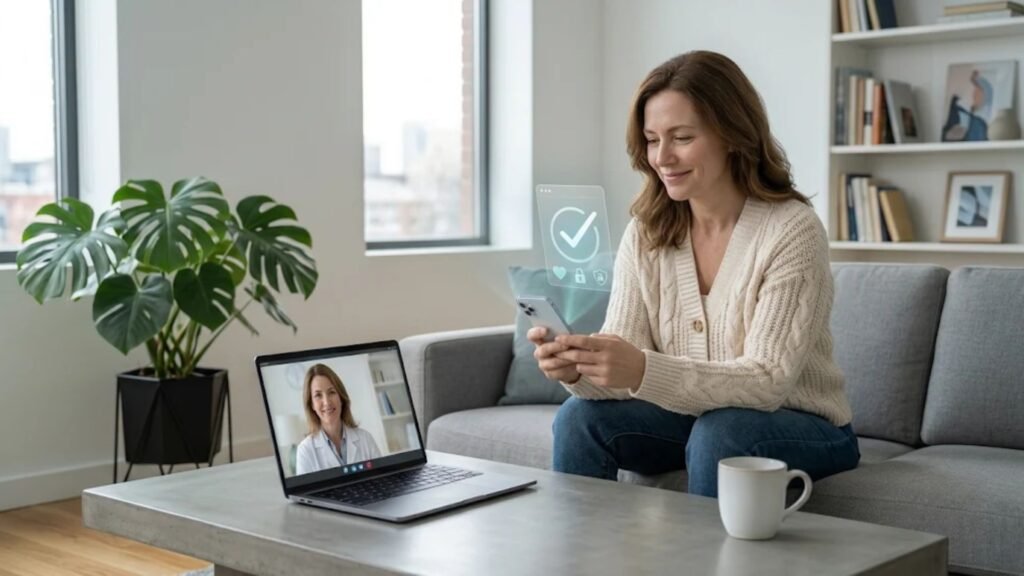
Picture this. You finally decide to ask for help. Then a long form pops up on your screen. Many people close the tab right there. That’s why an intake assessment digital platform mental health seekers can trust matters so much. It turns a stressful chore into a calm, guided chat. You answer short questions at your own pace.
A licensed clinician reviews every reply before your first visit. You skip the waiting room and the clipboard. This guide explains how a mental health intake assessment works online. You’ll see the benefits and the risks. You’ll also get a simple checklist for choosing a safe digital mental health platform for you.
Quick answer: A digital intake is a secure online screening. It collects your symptoms, history, and goals before your first visit. Most take 15 to 45 minutes. A licensed clinician reviews every answer.
What Is a Digital Mental Health Intake Assessment?
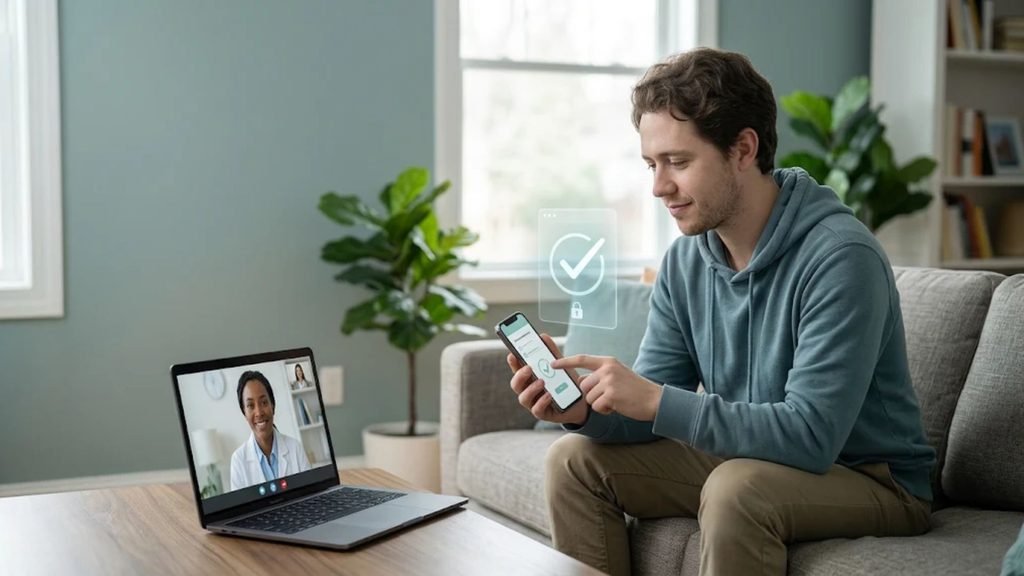
Think of intake as the front door to care. A mental health intake assessment gathers your symptoms, history, medications, and goals in one place. Online, you finish it through a digital mental health platform, a mental health app, or a video call. The old way used clipboards and paper packets. The new way fits in your pocket. It also works as the first step in telebehavioral health, where clinicians treat you from a distance.
Three formats dominate the market. The first is a self-guided online intake form you complete on your own time. The second is a live virtual intake evaluation with a clinician on video. The third is chat-style digital mental health screening powered by conversational AI. Each format has a job. Some people want speed. Others want a human face. Many platforms offer a mix of both, and that’s where behavioral health intake is heading.
Who Uses a Digital Intake Assessment in the U.S.?
Plenty of groups rely on this tool. Solo therapy practices use it to save front-desk time. Psychiatry groups use it to prepare a psychiatric nurse practitioner or physician before the first call. Community clinics, universities, employers, and telehealth platform startups use it too. Nearly any intake assessment digital platform mental health clinics adopt lands in one of these settings. Each group wants the same thing. They want better data, faster starts, and fewer lost patients. A licensed clinician still makes every final call.
How the Digital Intake Process Works, Step by Step
Every patient intake process follows a similar path. You register and give informed consent. Next you share basic details such as age, insurance, and contact info. Then comes symptom screening with short validated scales. After that you describe your story in your own words. A safety check follows. Finally a clinician reviews everything and recommends a level of care. The whole psychiatric intake evaluation usually takes 15 to 45 minutes.
| Step | What Happens | Why It Matters |
| 1. Register | You create a secure account | Protects your identity |
| 2. Consent | You review privacy terms | Sets clear expectations |
| 3. Screeners | You answer short scales | Measures symptom severity |
| 4. Narrative | You explain what’s going on | Adds context scales miss |
| 5. Safety check | You answer risk assessment questions | Flags urgent needs |
| 6. Clinician review | A professional reads your results | Confirms the right care |
| 7. Care plan | You get next steps | Shortens time to first appointment |
Speed matters here. A platform that flags urgent cases right away can send help in minutes instead of days. That’s the real promise of this process.
Self-Guided Intake vs. Live Virtual Intake
Which route suits you? Self-guided intake runs on your phone at any hour. Live intake puts you on a video call with a clinician. The table below shows the gap. Many people start self-guided and move to live. That hybrid route often feels the least stressful.
| Feature | Self-Guided Intake | Live Virtual Intake |
| Time needed | 15 to 30 minutes | 45 to 60 minutes |
| Clinician present | No (reviews later) | Yes |
| Best for | Busy schedules | Initial psychiatric assessment |
| Setup | Phone or laptop | Camera and microphone |
What Happens to Your Answers Afterward?
Your answers don’t vanish into a void. A clinician reads them and often receives a structured clinician summary. The platform can then send the data into the Electronic Health Record (EHR) through EHR integration. That step feeds treatment planning and helps match you with the right provider. By your first appointment assessment, the clinician already knows your story. You skip the repeat questions and start real work sooner.
Key Benefits of Digital Intake for Patients and Providers
Patients gain a lot. Better access to mental health care tops the list. People in rural communities, underserved populations, and mental health professional shortage areas can connect without long drives. Online tools also reduce wait times and enable early detection of mental health issues. They offer convenient mental health care at night or on weekends. Privacy helps too. Many people find stigma-free support easier to accept from their own couch.
Providers win as well. Fewer appointment no-shows means steadier revenue. Less data entry means lower clinician prep time and a smaller paperwork burden. Digital tools also support cost-effectiveness and scalability because one team can serve more people. Those savings can lead to more affordable mental health care for patients. One case stands out. A large academic medical center introduced a rapid intake model. Average waits for a first psychiatric visit fell from 37.32 days to 24.99 days. The time to start therapy dropped from 142.50 days to 28.84 days.
Benefits for Patients
You get speed, comfort, and control. You can finish your forms in your pajamas. You can pause and return later. You also get faster answers about what to do next. Many platforms add personalized treatment suggestions based on your results. That personal touch boosts patient engagement and keeps you coming back.
Benefits for Clinics and Practices
Clinics see gains in several areas. The right intake assessment digital platform mental health practices pick can lift completion rates and free staff time. Vendors often report numbers like those below. Treat them as vendor-reported ranges and not guarantees.
| Metric | Paper or PDF Intake | Digital or Conversational Intake |
| Intake completion rate | 40% to 60% | 80% to 95% |
| No-show rate change | Baseline | 25% to 40% lower |
| Clinician prep time | Baseline | 10 to 20 minutes saved per visit |
Why Traditional Intake Forms Fall Short in Mental Health

Here’s the irony. People who struggle most with focus and energy get the long intake forms. Someone in a depression episode may face cognitive impairment, including slower thinking and weaker memory. Asking that person to read 30 jargon-filled questions is tough. Many give up halfway. That form abandonment costs clinics patients and costs patients care. The paperwork burden also falls on front-desk staff who must chase missing pages.
Trust is another issue. Research links the therapeutic alliance to better outcomes in therapy. Yet a cold, anonymous form can damage that bond before it starts. Some people don’t want to write down trauma or substance use. They skip the form and often skip the visit. That means patient dropout and more appointment no-shows. It also adds clinician burnout, since staff waste hours on gaps. An intake assessment digital platform mental health teams trust removes these hurdles by asking less at once and asking it kindly.
How Conversational Screening Fixes the Problem
Conversational tools ask one question at a time. They use plain words and a friendly tone. With adaptive questioning, the tool follows up when an answer feels vague. Natural language processing helps it understand free-text replies. Real-time alerts notify a clinician if a patient mentions danger. Clinicians also get a conversation transcript along with scores. The tool doesn’t diagnose anyone. It simply gathers information in a gentler way.
What the Research Says About No-Shows and Drop-Off
The numbers are striking. A 2022 review in the American Journal of Managed Care put behavioral health no-show rates between 19% and 50%. The American Psychological Association reported in its 2023 Practitioner Pulse that 60% of psychologists had a full caseload and a waitlist. Demand is high and patience is low. Every lost intake leaves someone untreated. A smoother start protects both the patient and the practice.
Evidence-Based Tools and Screening Methods Used in Digital Intake
A good platform relies on validated scales and skips the homemade quizzes. These tools produce symptom severity scores that clinicians can trust and compare over time. They also support measurement-based care, where each treatment choice rests on data. Scoring stays the same online as on paper. Studies of telehealth show diagnostic accuracy comparable to in-person care when trained clinicians use secure systems.
Different tools check different problems. The table below lists common picks. Remember one rule. Screening isn’t diagnosis. A licensed clinician confirms every result and decides what comes next.
| Screener | What It Checks | Approx. Questions |
| PHQ-9 | Depression | 9 |
| GAD-7 | Anxiety | 7 |
| Columbia Suicide Severity Rating Scale (C-SSRS) | Suicide risk | Varies (screener has 6) |
| PC-PTSD-5 | Trauma symptoms | 5 |
| AUDIT-C | Alcohol use | 3 |
| DAST-10 | Drug use | 10 |
| QIDS-SR | Depression severity | 16 |
| Q-LES-Q | Quality of life | 16 (short form) |
PHQ-9, GAD-7, and C-SSRS Explained
Start with the big three. The PHQ-9 asks how often you’ve felt down, tired, or hopeless over two weeks. The GAD-7 does the same for worry and anxiety. The Columbia Suicide Severity Rating Scale (C-SSRS) asks direct questions about suicidal ideation and self-harm. A positive answer should trigger fast human follow-up and safety planning. Learn more at the National Institute of Mental Health or the 988 Suicide & Crisis Lifeline.
Other Screeners Platforms May Include
Some platforms go further. The PC-PTSD-5 screens for PTSD. AUDIT-C and DAST-10 look at alcohol and drug use, which can reveal a substance use disorder or a dual diagnosis. Short scales also exist for ADHD. The QIDS-SR tracks depression severity. The Q-LES-Q measures life satisfaction. Together these tools paint a fuller picture. They also help the clinician choose between options like cognitive behavioral therapy (CBT) and medication.
When Virtual Intake Is a Good Fit (and When It Isn’t)
Virtual care works well for many people. The right intake assessment digital platform mental health patients choose can handle mild to moderate depression or anxiety, relapse worries, and medication follow-ups. The American Psychiatric Association supports telepsychiatry as a valid, safe delivery method. Remote mental health treatment also helps busy parents and older adults with mobility limits. A telehealth platform lets them start care without leaving home.
Still, virtual care has limits. It’s a poor fit for active suicidal intent, severe intoxication, psychosis, or an unsafe home. It also struggles when you can’t find a private space. Some conditions need hands-on exams, such as certain eating disorders. Clinicians sometimes prefer in-person visits for very unstable first assessments. Honest platforms say this upfront. That honesty builds trust.
Red Flags That Call for Urgent or In-Person Care
Some situations can’t wait. If you feel unsafe, call or text 988 right now. That’s the 988 Suicide & Crisis Lifeline, and it offers free crisis support around the clock. You can also go to the nearest emergency room. Clinicians may then arrange crisis stabilization or a community stabilization program. A virtual intake should never replace urgent help.
| Quick Self-Check | Yes or No |
| Do you have a private space to talk? | |
| Do you have a working camera, phone, or internet connection? | |
| Are you safe right now? | |
| Are your symptoms mild to moderate? | |
| Can you reach emergency help if needed? |
Five yeses suggest virtual intake may suit you. Any “no” on safety means you should seek urgent care first.
What to Expect and How to Prepare for a Virtual Intake
Nerves are normal. You might feel anxious, relieved, or even tired afterward. Talking about pain takes energy. A good clinician slows down and checks in. Here’s a sample opening you might hear.
“There are no wrong answers here. Tell me what the last few weeks have felt like.”
You don’t need perfect words. Describing your sleep, your mood, and what changed recently is plenty. This kind of confidential mental health care begins with honesty and not performance. Parents helping a teen should sit nearby but let the teen speak. Teens often share more when they feel heard.
A little prep goes a long way. Pick a quiet room and test your tech a few minutes early. Gather your medication list and insurance card. Write down your goals. Keep crisis numbers handy. Many platforms also offer online therapy or teletherapy after intake, so ask about those options early. The table below sums up the key prep steps.
Your Pre-Intake Checklist
| Item | Why It Helps |
| Private space | Lets you speak freely |
| Charged device | Avoids dropped calls |
| Medication list | Supports safe prescribing |
| Insurance card | Speeds billing |
| Past diagnoses | Saves time |
| Your goals | Guides the plan |
Questions Worth Asking Your Clinician
Don’t leave without answers. Ask about costs, copays, and how often you’ll meet. Ask what follow-up care looks like. Ask if you can step up or down as needs change. Programs such as an intensive outpatient program (IOP), a partial hospitalization program (PHP), or group therapy may follow. This is called step-up and step-down care. Also ask what happens in a crisis and how your continuity of care will work if you switch providers.
Privacy, Security, and Compliance (HIPAA, 42 CFR Part 2, and State Laws)
Your data deserves a vault. HIPAA sets the national floor for patient data privacy. A HIPAA-compliant platform signs a Business Associate Agreement (BAA) and follows the HIPAA Security Rule. It also uses encryption in transit and at rest to protect protected health information (PHI). Strong data security includes audit logging, which records who viewed each file. Look for secure telehealth tools that guard confidential health records. Read the full rules at HHS.gov/hipaa.
Substance use records get extra protection. 42 CFR Part 2 requires stricter consent before programs share them. SAMHSA explains the details. A 2024 rule aligned Part 2 more closely with HIPAA but kept separate consent steps. Any intake assessment digital platform mental health clinics deploy must respect both laws. Cutting corners here can bring fines and broken trust.
| Law | What It Covers | Who It Affects |
| HIPAA | All health data | Providers and vendors |
| 42 CFR Part 2 | Substance use records | SUD treatment programs |
| California CMIA | State medical privacy | California providers |
| Texas H&S Code ch. 611 | Mental health records | Texas providers |
State-Level Rules That Change the Picture
States add their own layers. California CMIA and Texas Health & Safety Code chapter 611 both add mental-health-specific privacy rules. Many states require state-specific consent flows. Rules on minor consent also vary, often setting ages at 12, 14, or 16. Those rules can limit parental access to a teen’s records. Telehealth also demands identity and location verification so the clinician knows which state’s laws apply. Platforms that serve several states must handle each rule separately.
Monitoring, Progress Tracking, and Care Coordination After Intake
Intake is the starting line. It isn’t the finish. Baseline scores feed progress monitoring, so you and your clinician can see what’s working. Regular check-ins and mood logs support measurement-based care. They also keep patient engagement high. Some tools use predictive analytics to spot patients who may drop out. Higher patient satisfaction often follows when people see their own progress.
Evidence shows virtual programs can match in-person ones. A retrospective study compared 1,192 adults in in-person programs with 1,192 in telehealth versions. It found no significant difference in improvement in depression or quality of life. Telehealth PHP clients even stayed in treatment 2.8 days longer on average. Strong treatment fidelity helped too. The table below shows a sample trend. These numbers are illustrative only.
| Week | Sample PHQ-9 Score | Meaning |
| 0 | 16 | Moderately severe |
| 4 | 12 | Moderate |
| 8 | 9 | Mild |
| 12 | 6 | Mild |
How Care Teams Share Information Safely
Good care coordination keeps everyone on the same page. Secure messaging connects patients and clinicians. EHR integration moves data to primary care doctors, therapists, and specialists. Referrals to an IOP or PHP flow smoothly. Teams can plan medication management together. This shared view prevents repeated questions and conflicting advice. It also protects continuity of care when a patient changes providers.
How to Choose a Digital Intake Platform: Evaluation Checklist
Beware the shiny demo. A smooth screen means little without a clinical and legal backbone. The best intake assessment digital platform mental health buyers can pick scores well on safety, privacy, and fit. Think of it as buying a car. You’d check the brakes before the paint. Rate each vendor from 1 to 5 on every item below, then compare totals. A strong digital health solution should also plan for the future, with artificial intelligence features and even virtual reality tools on the roadmap.
Clinical features matter most. Look for automated triage that sorts urgent cases first. Confirm that real-time alerts reach an on-call clinician. Check that the tool produces a clear structured clinician summary. Then test usability. Ask real patients to try it. Their feedback beats any sales pitch.
10-Point Vendor Checklist
| # | Criterion | What to Verify |
| 1 | Validated screeners | PHQ-9, GAD-7, C-SSRS included |
| 2 | Signed BAA | Vendor signs before launch |
| 3 | Crisis escalation | Alerts reach a clinician fast |
| 4 | EHR integration | Works with your system |
| 5 | Customization | Edit questions and branding |
| 6 | Accessibility | ADA-friendly design |
| 7 | Multilingual support | Serves your community |
| 8 | Pricing clarity | No hidden fees |
| 9 | Reporting | Tracks completion and no-shows |
| 10 | Support | Fast, real human help |
Questions to Ask Before You Sign a Contract
Read the fine print. Ask who owns the data and how you can export it. Ask about uptime guarantees and the average setup time. Ask how the vendor handles a breach. Ask what happens if you leave, including how fast they delete your records. Request references from similar therapy practices or psychiatry groups. A confident vendor answers all of this without hesitation.
Frequently Asked Questions
What is a mental health intake assessment?
It’s the first structured screening in care. You share symptoms, history, medications, and goals. A clinician reviews the results and recommends a level of care. It sets the foundation for your treatment planning and helps your provider understand you before your first session.
How long does a digital mental health intake take?
Most self-guided versions take 15 to 30 minutes. A live video intake with a clinician often runs 45 to 60 minutes. Time varies by platform and by how much detail you share. You can usually pause and resume later.
Is an online intake as accurate as an in-person one?
Research suggests telepsychiatry matches in-person visits on diagnostic accuracy, treatment effectiveness, and patient satisfaction when trained clinicians use secure platforms. Some cases, such as severe crises or complex physical conditions, still call for in-person evaluation. Your clinician will tell you which route fits.
Is a digital mental health intake HIPAA compliant?
It should be. A trustworthy vendor signs a BAA, encrypts data, and logs access. Always ask for proof before sharing anything. If a vendor can’t sign a BAA, walk away. Substance use records may also fall under 42 CFR Part 2.
Does insurance cover a virtual psychiatric intake?
Many plans cover telehealth mental health visits, including intake. Coverage depends on your plan, your state, and the provider. Call your insurer and ask about copays and deductibles. A good clinic’s billing team can also verify benefits for you before your visit.
Conclusion
Digital intake changes the first step of care. You’ve seen how the process works, from consent to care plan. You’ve seen the benefits for patients and clinics. You’ve also learned the risks, the laws, and the checklist for choosing a vendor. The right tool feels kind to patients and useful to clinicians.
Ready to start? Book an intake with a licensed provider or request a platform demo today. Take your time and ask questions. If you’re in immediate distress, call or text 988 or visit the nearest emergency room. Help is real and help is close.
