
Behind the Scenes: What Does a Medical Technologist Do?
Ever wonder what happens to your blood sample after the nurse playfully slaps a bandage on your arm? it travels straight to a bustling, high-tech laboratory where some of the most amazing unsung heroes in healthcare get to work. We are talking about Medical Technologists!
When I first heard the title, I thought, what exactly do they do? Do they fix hospital computers? Not quite! Medical technologists—also known as clinical laboratory scientists—are the brilliant detectives of the medical world. They analyze your samples to uncover exactly what is going on inside your body. It is absolutely fascinating to realize that without them, doctors would be guessing most of the time!
If you love science, solving puzzles, and want a career that makes a massive difference without always being at the patient’s bedside, this might just be your dream job. Let’s dive right into what makes a medical technologist so essential, the amazing tasks they perform every day, and how you can join their exciting ranks!
Educational Requirements and Certifications
You can’t just walk into a lab and start mixing chemicals! Becoming a medical technologist requires some serious dedication to science. Typically, you will need a bachelor’s degree in medical technology, clinical laboratory science, or a closely related life science. These degree programs are packed with incredibly fun and challenging courses like chemistry, biology, and microbiology.
Do not just pick any degree, though! Here is a quick tip: Always make sure the program you choose is accredited by the National Accrediting Agency for Clinical Laboratory Sciences (NAACLS). This makes getting certified so much easier. After graduation, most technologists pass a certification exam from a recognized board, like the American Society for Clinical Pathology (ASCP). It takes hard work, but holding that certificate in your hands feels incredibly rewarding!
Core Responsibilities of a Medical Technologist
So, what does a typical day look like? Trust me, there is never a dull moment in the lab! Here are the core responsibilities that keep these professionals on their toes.
Performing Laboratory Tests
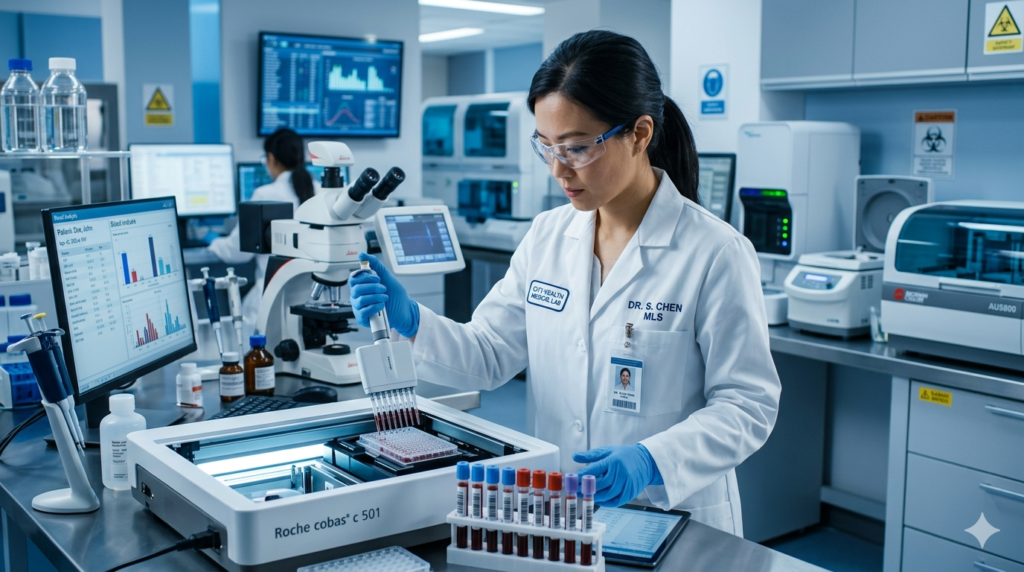
This is where the magic happens! Technologists run complex tests on blood, tissue, and other bodily fluids. They use microscopic, immunologic, biologic, and chemical tests to hunt down bacteria, viruses, and abnormalities. It is literally like being a microscopic detective!
Analyzing Results
Running the test is only half the fun. The real challenge is making sense of the data. Medical technologists meticulously review the results to ensure accuracy. If something looks off, they are the ones who dig deeper to find out why.
Quality Control and Assurance
You definitely do not want a mistake when it comes to a medical diagnosis! That is why quality control is a massive part of the job. Technologists constantly test their own processes, reagents, and samples to guarantee that every single result they hand over to a doctor is 100% accurate.
Maintaining Laboratory Equipment
Have you ever seen a modern medical lab? It is filled with million-dollar equipment! From automated cell counters to high-powered microscopes, technologists are responsible for calibrating and maintaining these incredible machines so they run flawlessly.
Collaboration with Healthcare Teams
While they might work behind the scenes, medical technologists are constantly communicating with doctors and nurses. They answer questions about test results and help guide treatment plans based on what they find in the lab.
Specialized Areas within Medical Technology
Did you know you don’t have to be a generalist? The lab is split up into some incredibly cool specialty areas. If you find one topic you absolutely love, you can focus your entire career on it!
Microbiology
Microbiology is all about the tiny invaders! If you love looking at bacteria, fungi, and parasites, this is the place for you. You will figure out exactly which bug is making a patient sick and which antibiotics will knock it out.
Hematology
This area focuses entirely on blood. You will examine red blood cells, white blood cells, and platelets. It is so crucial for diagnosing conditions like anemia, leukemia, and clotting disorders.
Clinical Chemistry
Are you a chemistry nerd? In this department, you will analyze the chemical composition of bodily fluids. You will test glucose levels, cholesterol, and enzymes to see how well a patient’s organs are functioning.
Immunohematology (Blood Banking)
This is arguably one of the most high-stakes areas in the lab! Blood bankers prepare blood for transfusions. You have to be incredibly precise to ensure a patient receives the exact right blood type. A mistake here is dangerous, but getting it right saves lives instantly!
Molecular Biology
This is the cutting edge of lab science! Molecular technologists look at DNA and RNA. They perform PCR tests (which we all heard so much about recently!) and help diagnose genetic disorders and infectious diseases.
The Impact of Medical Technologists on Patient Care
It is estimated that up to 70% of all medical decisions are based on laboratory results. Let that sink in for a moment! Without medical technologists, doctors would not know what antibiotic to prescribe, surgeons wouldn’t have safe blood for operations, and cancer diagnoses would be delayed. They are the foundation of modern medical care. Every single tube of blood they test represents a real person waiting for answers, and technologists deliver those answers with incredible precision.
Career Outlook and Growth Opportunities
Here is some amazing news: the demand for medical technologists is booming! As our population grows and healthcare needs expand, hospitals and independent labs are desperate for skilled lab professionals. You can start as a bench technologist and easily work your way up to a lab manager or director. Some even move into forensics, research and development, or healthcare IT. The sky really is the limit here!
Challenges and Rewards of the Profession
I won’t sugarcoat it—the job can be intense. You are on your feet a lot, and the pressure for absolute accuracy is high. Sometimes you have to work nights, weekends, or holidays, because illnesses do not take a day off.
But the rewards? They are absolutely immense! Knowing that your careful analysis just helped catch a dangerous infection early, or provided a life-saving blood match for an accident victim, is an incredible feeling. You get all the fulfillment of saving lives while getting to play with the coolest scientific equipment on the planet.
The Indispensable Role of Medical Technologists in Modern Healthcare
If there is one thing you take away from this, it should be that medical technologists are absolute rockstars! They are the brilliant, science-loving sleuths who keep our healthcare system running smoothly and safely. Next time you get a lab test done, take a moment to appreciate the incredible scientists working diligently behind those closed doors.
If this sounds like the perfect career path for you, why wait? Start researching NAACLS-accredited clinical laboratory science programs near you. Reach out to a local hospital and ask if you can shadow a lab tech for a day. Your thrilling career in medical science is waiting!
