
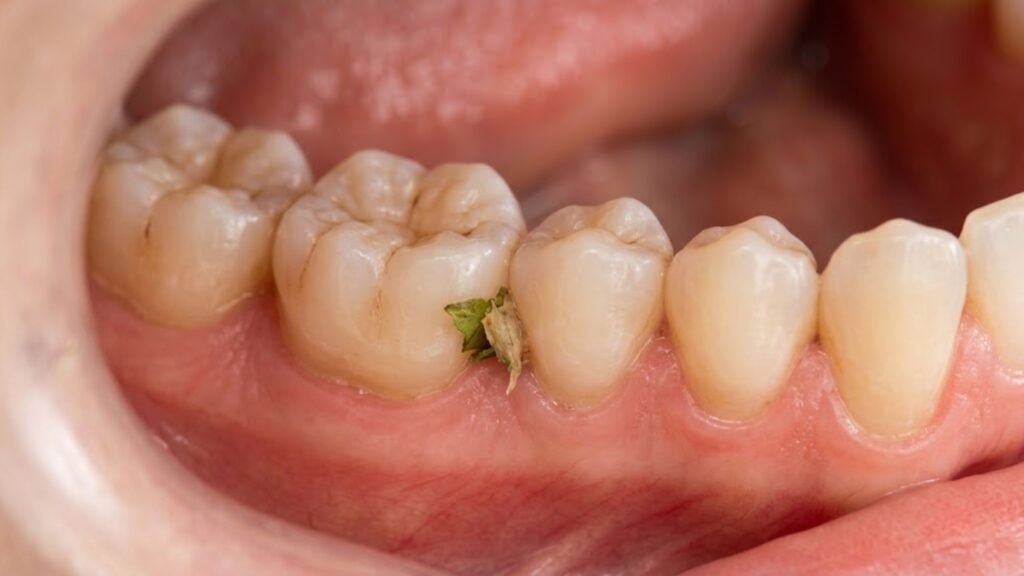
How to Remove Food From Teeth: Safe Ways to Clean Between Your Teeth
Getting food trapped between your teeth can be uncomfortable, distracting, and sometimes painful. Whether it’s meat, popcorn, seeds, or leafy vegetables, food stuck between teeth can be surprisingly difficult to remove. Brushing alone often won’t reach these narrow spaces, especially around your back teeth and gum line.
Learning how to get food out of teeth safely can help you avoid irritating your gums or damaging dental work. Simple tools such as dental floss and a water flosser can make the job easier. In this guide, you’ll learn safe ways to remove food from between teeth, which tools can help, what mistakes to avoid, and when persistent trapped food may need a dentist’s attention.
Why Does Food Get Stuck Between Your Teeth?
Food gets trapped when small spaces exist between neighboring teeth. Your back teeth can be especially troublesome because their grooves and uneven surfaces can catch food easily. Foods such as meat, popcorn, leafy vegetables, nuts, and fibrous fruits can leave food particles between teeth after a meal.
Sometimes the problem isn’t simply the food itself. Crowded teeth, open spaces, dental fillings, crowns, or tooth shape can create areas where food debris between teeth collects repeatedly. If you notice the same area trapping food every day, it’s worth mentioning it during your next dental visit.
Common Reasons Food Gets Trapped in Your Teeth
The location matters when you want to remove food from between teeth. Food wedged between two tightly touching teeth may need dental floss. Larger spaces may respond better to an interdental brush.
Food caught along the gum line may require gentle cleaning rather than aggressive picking. When food stuck near gum line areas keeps returning, don’t simply push harder.
The Best Ways to Remove Food From Your Teeth at Home
The safest approach to remove stuck food from teeth is to use a tool designed for cleaning between teeth. Start gently. If the food doesn’t move immediately, don’t force the tool deeper into the space.
For most people, flossing is a simple first choice. A water flosser can also help flush food from difficult areas. The goal isn’t to scrape your teeth aggressively. Instead, you want to loosen the food while protecting your gums.
How to Remove Food From Teeth With Dental Floss
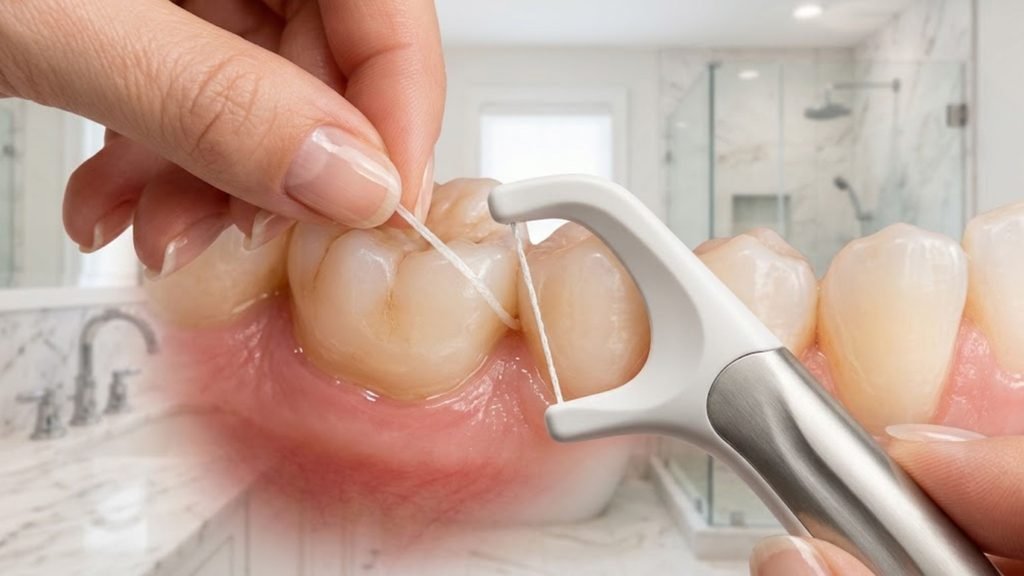

To learn how to get food out of teeth with floss, slide the floss gently between the teeth. Avoid snapping it downward because that can hurt the gum tissue.
Once the floss reaches the gum line, curve it around one tooth and move it gently up and down. Then clean the other side of the space in the same way.
This technique can help remove food stuck between teeth while also disrupting plaque. Daily interdental cleaning is an important part of routine oral care.
Want a convenient oral-care option? [Buy Now]
Can a Water Flosser Remove Food Stuck Between Teeth?
Yes, a water flosser can help remove loose food and clean areas between teeth. It uses a controlled stream of water to reach spaces that a toothbrush cannot clean effectively.
An oral irrigator can be especially convenient when you dislike traditional floss. It can also be useful for people who have difficulty handling string floss. However, no single tool is perfect for everyone.
How to Use a Water Flosser for Stuck Food
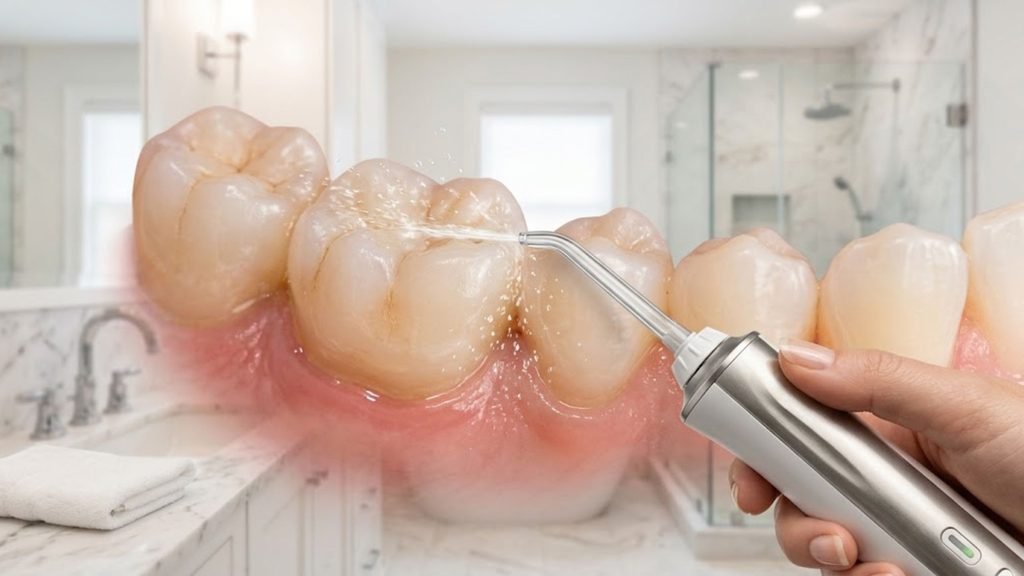
Start with a comfortable pressure setting. Place the tip near the area where the food is trapped. Then guide the water along the spaces between your teeth.
Let the water loosen the debris instead of trying to force the tip into space. Think of the water stream like a tiny pressure washer. You want enough force to move the debris without unnecessarily irritating your gums.
If water-based cleaning fits your routine, you can compare another option here: [Buy Now]
What Tools Can Help Remove Food From Between Teeth?
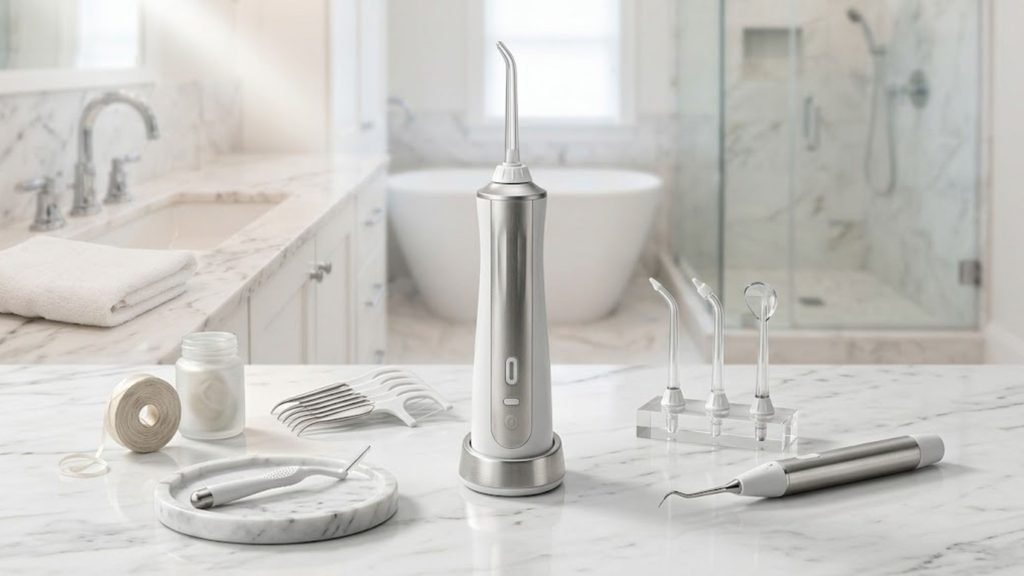
Different mouths need different tools. Tight contacts may make floss more practical. Wider spaces may work better with an interdental brush. A water flosser can provide another option when you prefer water-based cleaning.
When choosing an oral-care product, look beyond flashy features. Consider whether the tool fits your teeth, feels comfortable, and is easy enough to use consistently.
| Tool | Useful for | Main advantage |
| Dental floss | Tight spaces | Cleans directly between teeth |
| Floss holder | Difficult floss handling | Easier grip and control |
| Interdental brush | Wider spaces | Helps clean larger gaps |
| Water flosser | Food and plaque | Uses a stream of water |
| Oral-care pick | Certain accessible areas | Can help with loose debris |
Choosing the Right Tool for Your Teeth
If your teeth have very tight contacts, ordinary floss may slide into the space better than a brush. If you have larger gaps, an interdental brush may be more suitable.
People with braces, bridges, or other dental appliances may need specialized cleaning tools. Your dentist can recommend the right option based on your individual mouth.
Looking for another option for cleaning between teeth? [Buy Now]
What NOT to Use to Remove Food From Your Teeth
When food stuck in teeth won’t come out, frustration can lead to bad ideas. Don’t use needles, knives, scissors, safety pins, or other sharp household objects to dig around your teeth.
These objects can injure your gums or damage dental work. Even a regular wooden object can become problematic if you use excessive force.
The purpose of an oral cleaning tool is controlled cleaning. Digging aggressively can turn a small food problem into a painful gum injury.
Why Sharp Objects Can Cause Problems
Your gum tissue is delicate. Pushing a sharp object between teeth can create a cut or irritation. It may also push debris deeper into the area instead of removing it.
If you have sensitive gums or bleeding gums, aggressive cleaning can make discomfort worse. Instead, switch to gentle interdental cleaning with an appropriate tool.
What to Do if Food Is Still Stuck After Flossing
Sometimes flossing doesn’t solve the problem. The food may be lodged under a contact point, near a restoration, or in a space that needs another cleaning method.
Try rinsing with water and then gently cleaning the area again with an appropriate interdental tool. Don’t keep forcing floss into a painful space.
If the area remains uncomfortable or the same spot repeatedly traps food, there may be an underlying dental issue. A professional examination can determine whether the problem involves the tooth, gum tissue, or dental restoration.
When Stuck Food Needs a Dentist’s Attention
Persistent trapping deserves more attention when it comes with pain, swelling, a bad taste, pus, sensitivity, or ongoing bleeding.
These symptoms don’t necessarily mean you have a serious condition. They do mean the area shouldn’t be repeatedly irritated at home.
A dentist can check for cavities, damaged fillings, gum problems, or other issues. Professional dental cleaning can also remove hardened tartar that normal brushing cannot remove.
How to Prevent Food From Getting Stuck Between Your Teeth
Preventing stuck food between teeth starts with consistent cleaning. Brush twice a day with fluoride toothpaste and clean between your teeth regularly.
Brushing reaches many tooth surfaces. However, its bristles can’t effectively reach every tight space between teeth.
Drinking water after meals can help rinse loose debris. However, water alone doesn’t replace proper flossing or another form of interdental cleaning.
A Simple Daily Routine for Cleaner Teeth
A practical routine doesn’t need to take long. Brush your teeth twice daily with fluoride toothpaste. Then use dental floss, an interdental brush, or another suitable method to clean between your teeth.
This routine helps remove food and disrupt bacteria-containing plaque before it hardens into tartar. Good oral hygiene also supports gum health.
If you’re prone to tooth decay or cavities, regular interdental cleaning becomes especially important.
Frequently Asked Questions About Removing Food From Teeth
How do you remove food stuck between teeth?
The easiest method is usually gentle dental floss. Slide it carefully between the teeth and curve it around each tooth. If floss doesn’t work well, try an interdental brush or water flosser.
What is the fastest way to remove food from teeth?
For loose food, rinsing with water may work quickly. For food wedged tightly between teeth, floss or another interdental cleaner is usually more useful.
Avoid using sharp household objects because they can injure your gums.
Can a water flosser remove food stuck between teeth?
Yes. A water flosser can help flush food and clean around the gum line. Use it according to the manufacturer’s instructions and avoid unnecessarily high pressure.
Is flossing better than a water flosser?
Neither method is automatically best for everyone. Flossing works well in tight spaces, while a water flosser may be easier for people who dislike string floss.
The important thing is choosing an effective method that you can use consistently.
Can I use a dental pick to remove food?
A purpose-designed dental pick may be appropriate for some people when used gently. However, don’t use needles, knives, pins, or other sharp household objects.
If you’re unsure which tool is suitable for your teeth, ask your dentist.
Why does food keep getting stuck between the same teeth?
Repeated trapping can happen because of tooth spacing, tooth shape, dental restorations, or changes around the gums.
If the same location constantly catches food, a dentist can examine it and identify the cause.
What if I can’t remove the food?
Stop forcing the area if cleaning causes pain or bleeding. Try another gentle interdental method.
If the food remains stuck or the area becomes painful or swollen, arrange a dental examination.
Can trapped food cause cavities?
Food itself isn’t the only concern. Plaque contains bacteria that can contribute to tooth decay when it remains on teeth.
Regularly removing food and plaque between teeth supports better oral hygiene and helps protect against cavities.
Final Thoughts on How to Remove Food From Teeth
Knowing how to remove food from teeth can save you from unnecessary irritation and uncomfortable digging. Start with a gentle method such as flossing. If that doesn’t suit you, an interdental brush or water flosser may be a better fit.
The bigger goal isn’t just removing today’s food. It’s keeping the spaces between your teeth clean every day. Consistent interdental cleaning removes food debris and helps control plaque where a toothbrush can’t reach.
If food repeatedly becomes trapped in exactly the same place, especially with pain, swelling, or persistent bleeding gums, don’t keep fighting the symptom. A dental professional can check what’s causing it and recommend the right solution.
