

Can You Get a Pap Smear or Pelvic Exam on Your Period?
In the US, regular cervical cancer screening is a vital part of preventive health care. You want to make sure your results are accurate. But you should never stress over normal bodily functions. Your health care provider understands this completely. Let us look at what you really need to know.
Wondering if you can get a Pap smear on your period? It is a very common question. Timing your reproductive health care around your natural cycle can feel quite tricky. We will explore exactly how menstruation affects your routine screening procedure. You will learn if blood changes your test results and how to decide if you should keep your OB-GYN appointment.
What Is a Pap Smear Versus a Pelvic Exam?

A Pap test specifically collects cells from your cervix. Doctors use this test to screen for precancerous changes and cervical cancer. It is one of the best early detection methods available today. It looks for issues long before they become serious problems.
A routine pelvic exam checks the physical health of your reproductive organs. Your doctor examines your vulva, vagina, cervix, uterus, and ovaries. Doctors often perform both during the same visit. However, they serve entirely different diagnostic purposes for your health.
Can You Have a Pap Smear While Menstruating?
Yes, you can absolutely have a Pap smear while menstruating. A gynecologist handles periods every single day. They are medical professionals who understand the female body. You never need to feel embarrassed or worried about bleeding.
Doctors do not judge you for having your period during an exam. In fact, many people have bleeding issues that require a visit anyway. Your OB-GYN cares about your health, not your bodily fluids. They are fully prepared for this exact situation.
“Your health care provider cares about your well-being, not your bodily fluids. Never feel embarrassed about normal menstruation during your visit.”
Does Menstrual Blood Affect Pap Smear Accuracy?
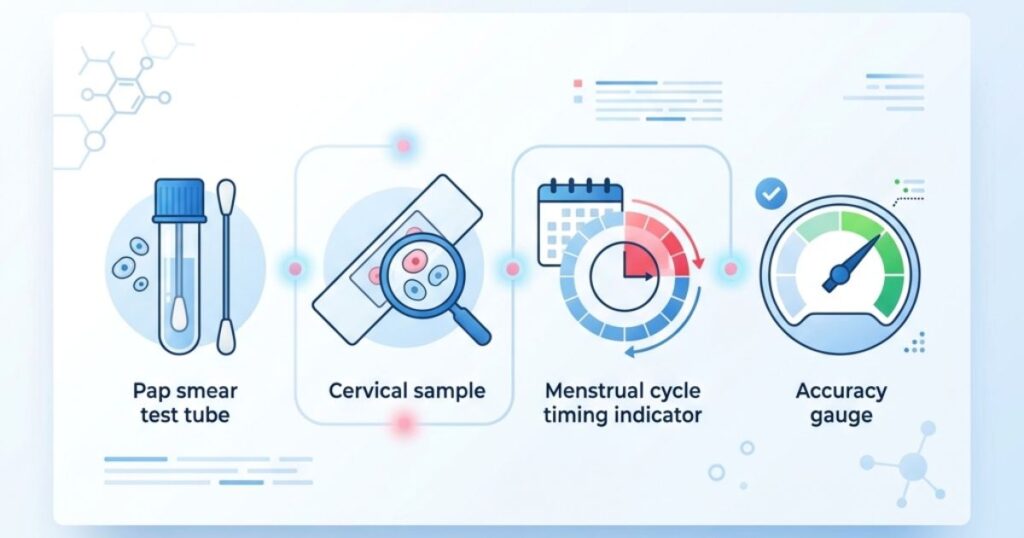
Modern testing uses a liquid-based method to process your sample. This advanced technique filters out mucus and menstrual blood quite well. It is much better than older methods at finding abnormal cervical cells. Most light bleeding will not ruin your sample at all.
However, very heavy bleeding can sometimes obscure the view. If there is too much menstrual blood, the lab cannot see the cells clearly. This might lead to an inconclusive result. You would then need to schedule follow-up Pap tests to get a clear answer.
When It Is Safe to Keep Your Appointment
If you have a very light flow or spotting, keep your appointment. The beginning or tail end of your period will not hide the cells. The lab can still perform accurate cervical cancer screening. You do not need to alter your Pap test scheduling for light bleeding.
Always keep your appointment if you have urgent symptoms. Severe pelvic pain or abnormal bleeding requires immediate medical attention. Your doctor needs to evaluate these symptoms right away. Period blood will not stop them from diagnosing the problem.
When It Makes Sense to Reschedule
Rescheduling is often smart if you have a very heavy flow. Changing your date avoids an inconclusive test result. If you are on day two of your cycle, consider calling the clinic. Proper menstrual cycle timing makes the testing process much smoother.
Personal comfort is another great reason to pick a new date. Feeling anxious or physically uncomfortable is perfectly valid. You can easily call the office to find a better day. Good preventive health care should never cause you unnecessary stress.
| Flow Level | Recommendation | Reason |
| Light Flow or Spotting | Keep Appointment | Lab can easily see cells. |
| Moderate Flow | Ask Your Doctor | Depends on exact testing method. |
| Heavy Flow | Reschedule | Blood may hide abnormal cervical cells. |
| Urgent Pain | Keep Appointment | Doctor must check severe symptoms. |
The Best Time in Your Cycle to Schedule a Pap Smear
The best time for this test is right in the middle of your cycle. Try to book your visit between days 10 and 20. This timing aligns perfectly with current reproductive health guidelines. It gives the lab the best chance to see everything clearly.
Proper timing ensures the best collection of cells. The mid-cycle window avoids heavy bleeding naturally. This simple step guarantees the most accurate routine screening procedure. It saves you from worrying about a repeat visit.
How to Prepare and What to Avoid Before Your Appointment
You must avoid certain products before your test. Skip using tampons, douching, and any vaginal medications for two full days. These items can wash away cells or hide them. A clean sample is crucial for accurate HPV testing and prevention.
You should also avoid sexual intercourse for 48 hours prior. Intercourse can irritate the tissue or mask signs of sexually transmitted infections. Skipping intimacy helps ensure a pristine cell sample. This guarantees your doctor gets the clearest picture of your health.
What to Expect During the Exam If You Are on Your Period
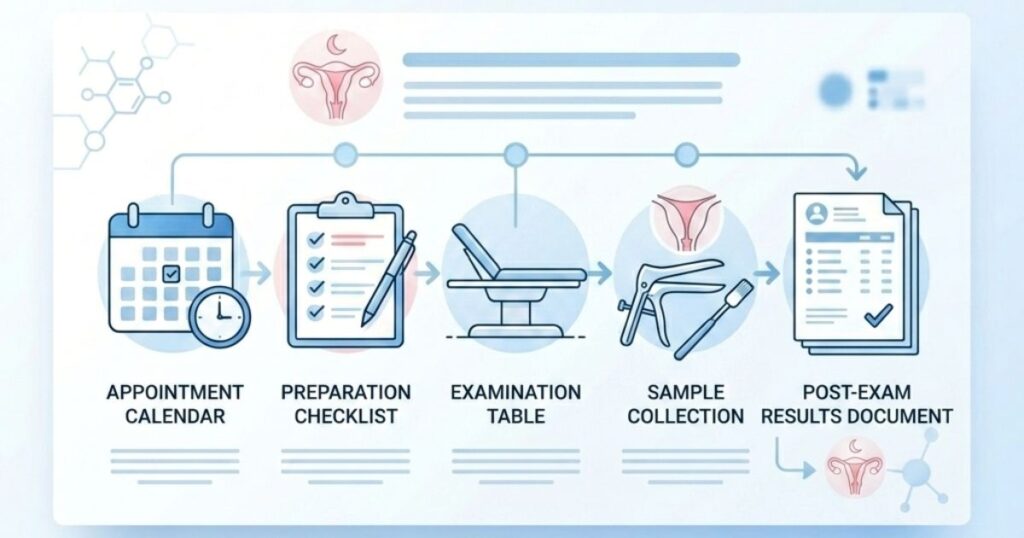
Managing your flow at the clinic is actually very easy. You can simply wear a pad or period underwear to your appointment. You just remove it right before the physical exam begins. The staff will provide a protective paper for the table.
During the procedure, the doctor uses a speculum and a tiny brush. They gather cells quickly from your cervix. The entire process takes only a few short minutes. The nurse will hand you wipes to clean up comfortably afterward.
Understanding Abnormal Results and Next Steps
An abnormal result does not mean you have cervical cancer. It often points to minor inflammation or the presence of benign cells. Sometimes, it simply indicates Human papillomavirus (HPV). Your doctor will explain exactly what your specific lab results mean.
If blood ruined the sample, you just need a quick re-test. Standard US follow-up care might also include a closer look called a colposcopy. Regular checkups ensure you stay ahead of any issues. Consistent care is the best way to protect your long-term health.
FAQ
- Can you get a Pap smear on your period? Usually light spotting is okay, but a moderate/heavy flow can make results less accurate.
- Should you cancel your smear if you’re on your period? Call the clinic first—many will still see you for light bleeding, but may reschedule the Pap test if flow is heavier.
- Should you cancel your gyno appointment if on your period? Not usually. You can still keep most gyno visits, though some exams/tests may be postponed depending on symptoms and flow.
- Do you need to reschedule if your period started? Maybe. If it’s just light spotting, often no; if bleeding is heavier, rescheduling is common for the Pap portion.
- How many days after your period can you get a Pap smear? A common recommendation is to schedule at least about 5 days after bleeding stops for the clearest sample.
- What should you avoid before a Pap smear? For 24–48 hours before, avoid sex, douching, vaginal creams/meds, lubricants, or tampons unless your clinician says otherwise.
